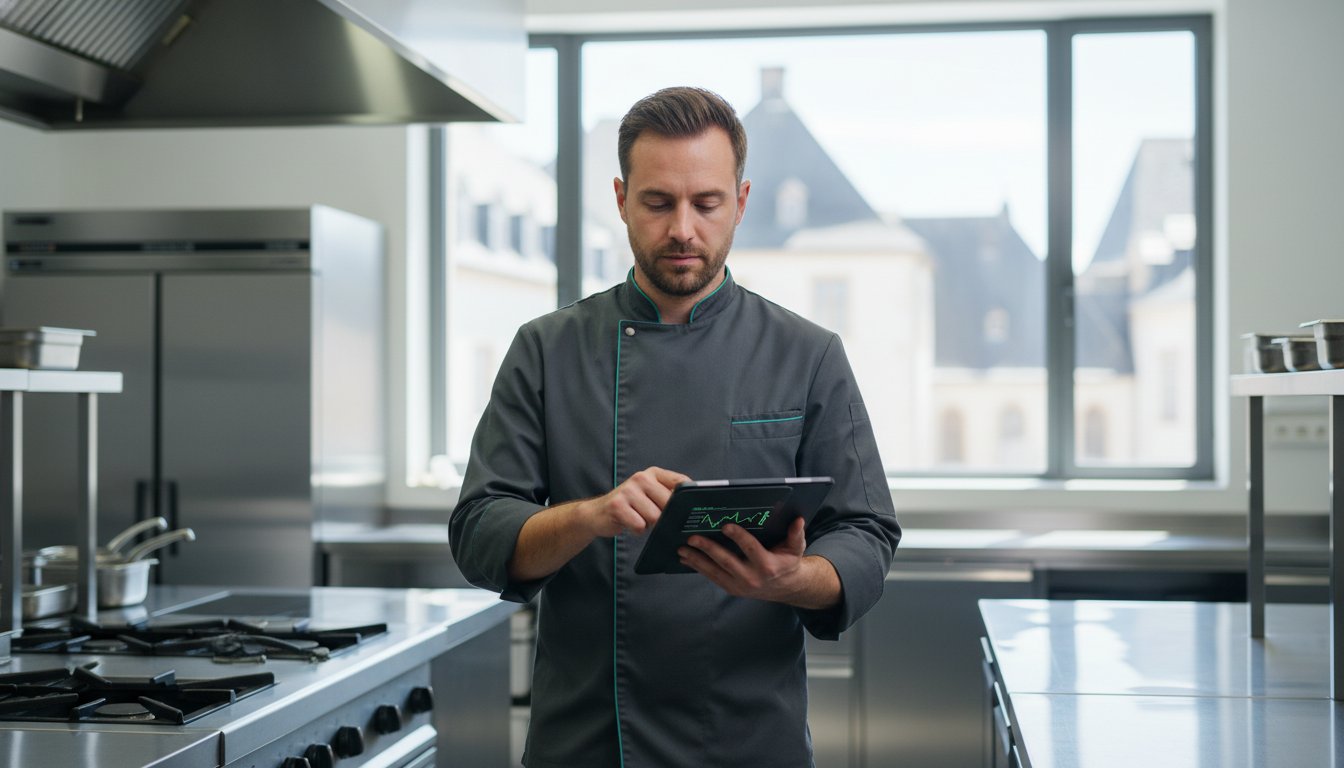
What if the most stressful part of your kitchen operation, the constant anxiety over a failing fridge or a missed manual temperature check, simply vanished? For many hospitality leaders in Luxembourg, the traditional paper-based HACCP system often feels more like a liability than a safety net. You're likely tired of the friction caused by manual logs and the looming threat of food waste that can cost a business thousands of Euros in a single night. Real-time food safety monitoring changes this dynamic by replacing manual labor with automated precision, ensuring your stock remains protected 24/7.
We understand that regulatory pressure is mounting, especially with the FDA's May 2026 pilot program for AI-informed inspections and evolving global standards for allergen thresholds. This guide will show you how to transform your kitchen into a proactive environment where compliance is a silent, automated background process. We'll explore the shift from reactive chores to total visibility, detailing how digital tools and temperature sensors guarantee you're always ready for an inspection without the last-minute paperwork scramble.
Key Takeaways
- Transition from manual, snapshot checks to a continuous, automated prevention model that eliminates operational blind spots.
- Learn how automated temperature alerts act as a 24/7 shield, protecting your inventory from costly failures and reducing food waste.
- Discover why real-time food safety monitoring ensures total audit readiness by replacing vulnerable paper logs with accurate, digital records.
- Follow a structured five-step framework to implement digital HACCP checklists and sensors without overwhelming your kitchen staff.
- Understand the strategic advantage of multi-site management tools for maintaining consistent safety standards across every location in your portfolio.
Beyond Periodic Checks: Defining Real-Time Food Safety Monitoring in 2026
In 2026, the definition of kitchen compliance has shifted from a dusty binder of paper to a live, breathing stream of data. Real-time food safety monitoring isn't just a digital version of your old logs; it's an automated ecosystem that captures data every minute, 365 days a year. While manual checks capture a single moment in time, real-time systems provide a continuous narrative of your kitchen's health. This transition allows operators to move from a reactive "fix it when it's broken" mindset to a proactive stance that prevents issues before they escalate into a crisis.
The three pillars of this modern approach include automated sensors for environmental tracking, digital HACCP checklists for staff workflows, and instant alert systems for immediate corrective action. This year marks a tipping point because regulatory bodies are increasingly favoring digital-first evidence. In the EU, systems like the Rapid Alert System for Food and Feed (RASFF) highlight how quickly safety data moves across borders. Local authorities in Luxembourg are following suit, expecting businesses to demonstrate a level of oversight that manual logs simply cannot provide.
The Evolution from Snapshot Logs to Continuous Streams
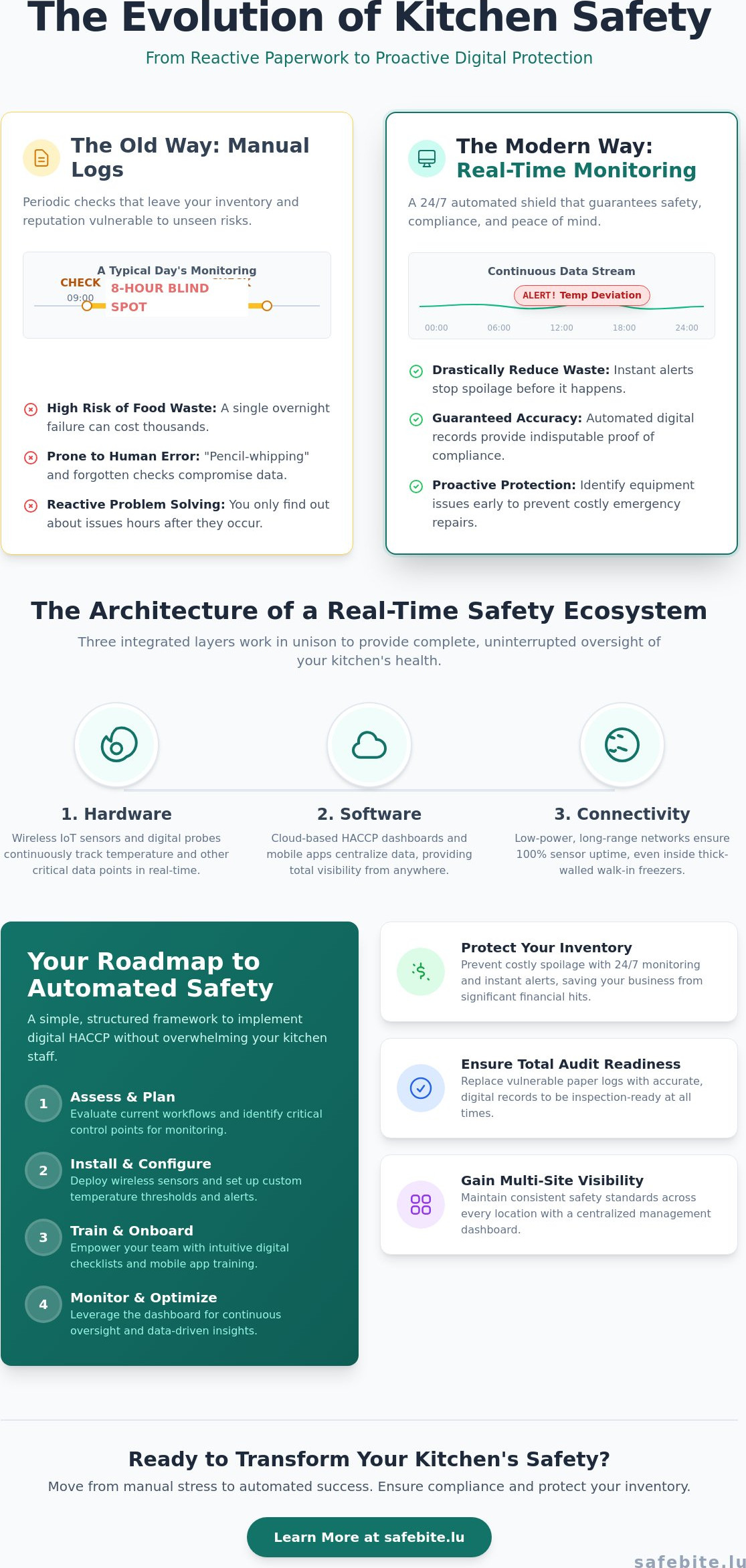
Traditional compliance relies on snapshots. A chef checks a fridge at 09:00 and again at 17:00. If the compressor fails at 10:00, the stock is lost before the next check even occurs. Continuous monitoring removes this vulnerability. It eliminates the common problem of "pencil-whipping," where staff backfill logs from memory or, occasionally, fabrication. In a national safety audit, a continuous data stream carries significant legal weight. It proves consistent adherence to safety protocols rather than just twice-daily performance, giving you a much stronger defense during inspections.
Core Components of a Real-Time Ecosystem
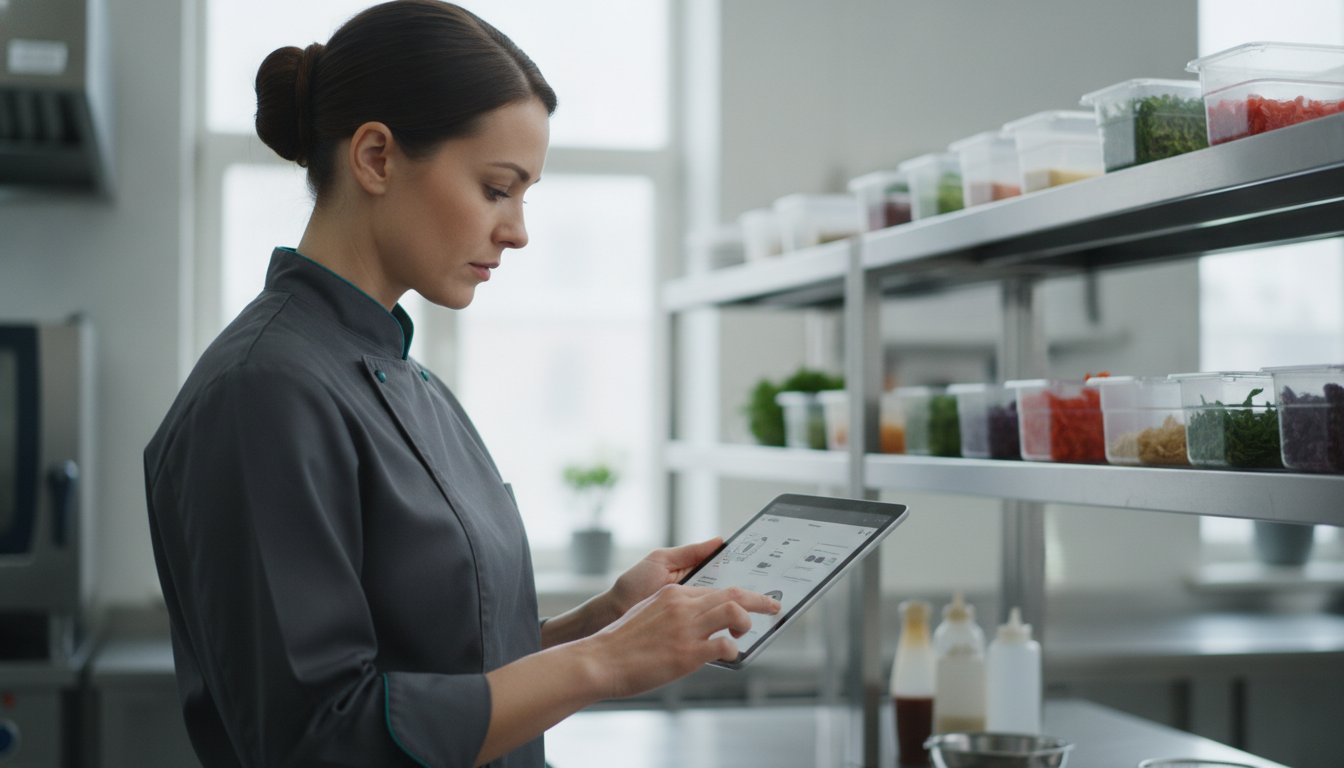
A functional real-time food safety monitoring system requires three integrated layers. First, the hardware consists of wireless IoT sensors and digital temperature probes designed to withstand the high-moisture, high-temperature environment of a professional kitchen. Second, the software layer uses cloud-based HACCP dashboards and mobile applications to give managers total visibility across multiple sites. Finally, connectivity is the backbone. Modern systems utilize low-power, long-range networks. These ensure that even a sensor buried deep inside a thick-walled walk-in freezer maintains 100% uptime and remains connected to your central hub without interruption.
The Architecture of Vigilance: How Real-Time Systems Protect Your Business
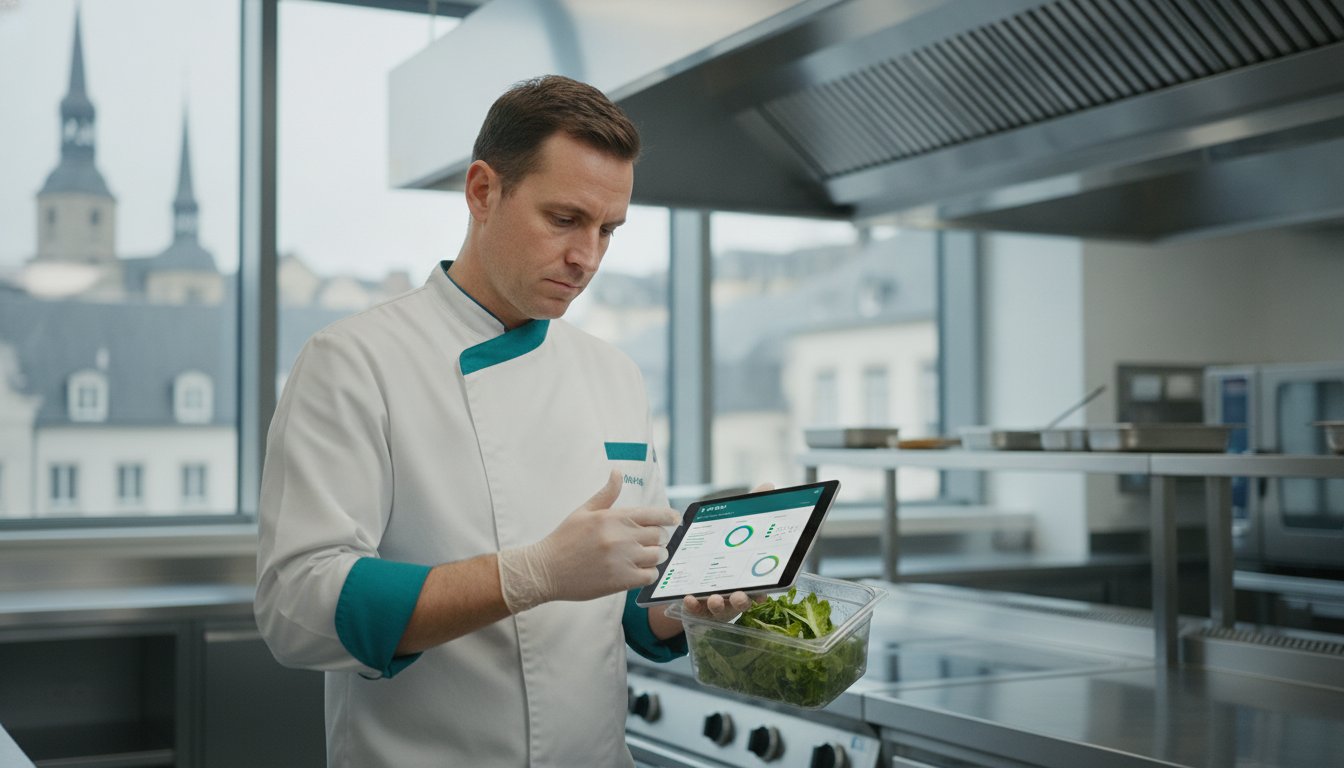
The operational heart of a modern kitchen is no longer the pass; it's the centralized dashboard. This digital hub acts as the single source of truth for management, aggregating every data point into a clear, actionable overview. By centralizing information, hospitality leaders can maintain total visibility over their operations, even when managing multiple sites nationwide. This architecture doesn't just record data; it creates a culture of vigilance where equipment health and hygiene standards are visible to everyone, from the head chef to the owner. When you implement real-time food safety monitoring, you aren't just buying sensors; you're building a defensive perimeter around your brand's reputation.
Beyond immediate safety, this data-driven approach identifies equipment failure before it becomes a crisis. If a compressor starts cycling more frequently or a fridge door is left ajar, the system detects these anomalies in the data trend. Instead of arriving at work to find a warm walk-in and thousands of Euros in spoiled stock, you receive an early warning. This allows for scheduled maintenance rather than emergency repairs, which are notoriously expensive and disruptive to service. Managing these variables through a multi-site management dashboard ensures that your standard of care remains identical across every location in your portfolio.
Automated Alerts: The First Line of Defense
Threshold notifications are the most immediate benefit of an automated system. If a storage unit drifts outside its safe temperature range, the system triggers an instant alert via SMS or mobile notification. This prevents the loss of high-value inventory, such as premium meats or delicate seafood, which can save a business from significant financial hits. A crucial feature of these systems is the "escalation path." If the primary staff member doesn't acknowledge an alert within a set timeframe, the notification moves up the chain of command. This ensures that a night-time power surge or a mechanical failure at any location doesn't go unnoticed until the morning shift arrives.
Digital HACCP Checklists and Staff Accountability
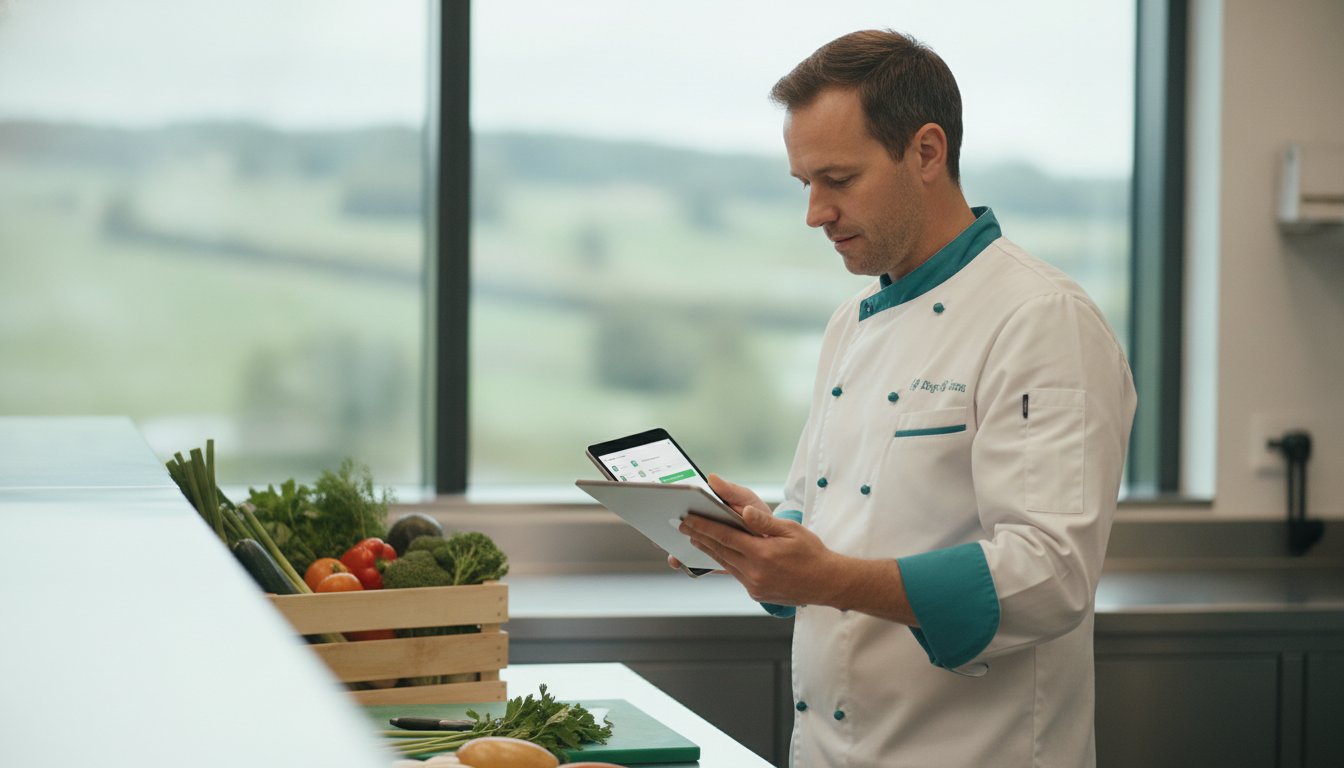
Smart reminders transform how staff interact with hygiene protocols. Instead of a manager constantly checking if surfaces have been sanitized, the system sends a prompt directly to the staff's mobile device. These digital HACCP checklists require time-stamped entries, which ensures that tasks are completed exactly when required rather than "pencil-whipped" at the end of a shift. This level of detail is particularly vital for allergen management. By integrating allergen cross-contamination checks into the real-time workflow, you create a verifiable record of safety that protects both your customers and your business during a national audit.
Manual Logs vs. Real-Time Data: Solving the Compliance Gap
The traditional paper binder is a fixture in many Luxembourgish kitchens, yet it represents a significant operational vulnerability. Paper logs are susceptible to physical damage, loss, and the "invisible" risk of falsification, often referred to as pencil-whipping. When a staff member backfills a week's worth of temperature checks in five minutes, the data integrity is lost. Real-time food safety monitoring eliminates this uncertainty by capturing data at the source. It replaces a static, potentially inaccurate record with a dynamic stream of evidence that proves your kitchen has maintained safety standards every minute of the day. This transition closes the compliance gap that opens up during busy shifts when manual checks are inevitably forgotten.
A common hesitation among hospitality leaders is the perceived difficulty of training a diverse workforce on new digital tools. However, modern interfaces are designed to be as intuitive as a smartphone app, often requiring less time to master than the complex filing systems of a paper-based HACCP plan. By moving to digital platforms, you shift the burden of data entry from the employee to the system. This allows your team to focus on food quality and service while the technology handles the administrative heavy lifting. The result is a more engaged workforce and a management team that can sleep soundly, knowing the data is accurate and secure.
Data Integrity and Audit Performance
Inspectors today are looking for more than just a signature on a page; they want to see proof of a proactive safety culture. Digital logs are increasingly preferred by auditors because they are tamper-proof and easily searchable. Instead of handing over a stack of greasy binders, you can generate instant compliance reports from your dashboard. This "audit-ready every day" mindset changes the atmosphere of an inspection from a stressful event into a routine verification of your excellence. Digital records provide a level of transparency that demonstrates total control over your cold chain and hygiene protocols.
Operational Efficiency and ROI
The return on investment for automation is often realized in saved labor hours. Consider the cumulative time staff spend walking to fridges, reading thermometers, and recording data manually several times a day. When you automate these tasks, you reclaim those hours for revenue-generating activities. Additionally, the reduction in food waste provides a direct boost to your profitability. A single avoided fridge failure can pay for a system subscription for an entire year. These systems scale effortlessly across multiple locations, allowing you to manage a growing portfolio without a proportional increase in administrative staff or oversight costs.
Strategic Implementation: A Roadmap to Proactive Safety
Transitioning your kitchen to a digital-first model is a strategic evolution that requires a methodical approach. It's not about replacing your entire kitchen infrastructure; it's about enhancing it with a layer of intelligent oversight. A successful rollout begins with identifying where your manual processes are most likely to fail. By adopting a structured framework, you can move toward real-time food safety monitoring without overwhelming your team or disrupting your daily service. This phased approach ensures that each layer of technology is fully integrated before moving to the next stage of automation.
The most effective implementation starts with a pilot program. Rather than digitizing every process at once, begin with your cold storage units. These areas represent the highest financial risk and the most common source of compliance issues. Once your team is comfortable with automated temperature alerts, you can expand the system to include other critical control points. This gradual integration allows you to retrofit existing equipment with wireless sensors, avoiding the need for costly hardware replacements. To begin this journey, you can explore our Temperature Monitoring System and see how easily it fits into your current setup.
Step-by-Step Transition Strategy
- Audit current manual processes: Identify the specific times and locations where manual checks are frequently missed or inaccurately recorded.
- Pilot testing: Deploy sensors in a single, high-stakes area like your main walk-in freezer to demonstrate immediate value and reliability.
- Equipment integration: Attach non-invasive IoT sensors to your existing fridges and hot-holding units to capture data without technical overhauls.
- Staff onboarding: Introduce the mobile interface to your team, focusing on how it reduces their administrative workload.
- Full-scale rollout: Expand the system to include digital HACCP checklists and allergen management tools across the entire operation.
Building a Culture of Digital Compliance
The success of any new system depends on the people using it. It's essential to train staff to view digital tools as professional helpers rather than surveillance trackers. When a chef receives an automated alert, they should see it as a tool that prevents them from serving compromised food or losing stock. Clear protocols must be established for responding to these alerts, ensuring that corrective actions are documented immediately within the app. Management can then use the dashboard data for positive reinforcement. Instead of looking for mistakes, use the reports to identify and reward shifts that maintain perfect compliance scores, reinforcing a proactive safety culture throughout the business.
SafeBite: The National Standard for Real-Time Kitchen Oversight
Choosing the right partner for your kitchen's digital transformation is a decision that impacts your operational safety and your bottom line. SafeBite has established itself as the specialized solution for the Luxembourgish hospitality market, offering a level of local expertise that generic platforms can't match. By choosing a system designed for the specific needs of our national industry, you gain access to a toolset that bridges the gap between regulatory requirements and daily kitchen reality. Real-time food safety monitoring becomes a seamless extension of your team; it provides the "inspection-ready" peace of mind that allows you to focus on the culinary experience rather than the compliance paperwork.
The strength of the SafeBite platform lies in its unified approach. We don't just provide isolated tools. We offer a cohesive ecosystem where digital HACCP checklists integrate directly with our temperature monitoring system. This means that a temperature deviation caught by a sensor can automatically trigger a corrective action task on a staff member's mobile device. For growing restaurant groups, our multi-site management dashboard provides a bird's-eye view of every location from a single interface. You can verify that a kitchen in Esch-sur-Alzette is maintaining the same high standards as your flagship site in Luxembourg City without leaving your office.
Designed for the Modern Kitchen
SafeBite replaces the friction of paper logs with intuitive, automated workflows that staff actually enjoy using. The platform utilizes real-time reminders to ensure that hygiene tasks and allergen management protocols are never overlooked during a busy lunch rush. Our specialized allergen management tool helps your team navigate complex labeling requirements with precision, which reduces the risk of cross-contamination. Many local businesses have reported a significant decrease in compliance-related stress after switching to our platform. They've traded the frantic morning binder checks for a steady, automated flow of verified data.
National Expertise and Support
Working with a local partner means your safety system is always aligned with national standards and evolving EU regulations. As we move through 2026, the legislative environment continues to shift toward digital-first evidence, and SafeBite evolves alongside these changes. We provide ongoing support and platform updates to ensure your business remains at the forefront of safety technology. You aren't just buying software; you're securing a future-proof shield for your hospitality business. Secure your kitchen with SafeBite’s real-time monitoring today.
Secure Your Kitchen's Future with Automated Excellence
Transitioning from reactive chores to a seamless, automated shield is the most significant operational upgrade a modern hospitality business can make. By replacing vulnerable manual HACCP logs with 100% digital accuracy, you eliminate the constant anxiety of missed checks and potential food waste. Real-time food safety monitoring doesn't just record data; it provides 24/7 temperature peace of mind by alerting you to issues before they become crises. This proactive stance ensures that your kitchen remains a controlled, efficient environment where safety is a silent, reliable partner rather than a constant source of stress.
SafeBite provides the national compliance expertise necessary to navigate the specific requirements of the Luxembourgish market. Our platform integrates digital checklists and temperature sensors into a single source of truth, giving you total visibility across every site you manage. It's time to move beyond the limitations of paper and embrace a system built for the precision and transparency required in 2026. Book a demo to see SafeBite’s real-time monitoring in action and experience the confidence that comes with total audit readiness. Your journey toward a smarter, safer kitchen starts with a single proactive choice.
Frequently Asked Questions
What is real-time food safety monitoring and how does it work?
It's an automated system that uses wireless IoT sensors and cloud-based software to track critical safety variables like temperature and humidity 24/7. These sensors transmit data to a central hub, which records the information in a digital log. If a storage unit drifts outside of its pre-set safety parameters, the system immediately sends a notification to your mobile device or computer, allowing for instant corrective action.
Is digital HACCP monitoring legally accepted by health inspectors?
Yes, digital records are fully accepted and increasingly preferred by health inspectors in Luxembourg and across the EU. Digital platforms provide a tamper-proof, time-stamped audit trail that demonstrates a higher level of precision than manual logs. Authorities value the transparency of real-time food safety monitoring because it proves consistent adherence to safety standards rather than just twice-daily snapshots.
Can real-time monitoring systems help reduce food waste in my restaurant?
Yes, these systems act as an early warning shield that protects your inventory from equipment failure. By detecting a temperature rise in a walk-in freezer at 03:00, the system allows you to save high-value stock before it reaches the danger zone. This prevents the loss of thousands of Euros in spoiled ingredients and ensures your kitchen remains profitable and efficient.
How much does it cost to implement an automated temperature monitoring system?
The total investment depends on the number of cold storage units, the size of your facility, and the specific software features you require. While we don't provide specific quotes here, the cost is typically structured as an initial hardware setup followed by a monthly subscription. Most operators find the system pays for itself by reclaiming labor hours and preventing a single major stock loss event.
Do I need special IT skills to manage a digital food safety platform?
No, you don't need specialized technical knowledge to operate these platforms. Modern interfaces are designed for the fast-paced kitchen environment and are as intuitive as a standard smartphone app. Daily tasks involve simple interactions with digital checklists and responding to automated alerts, while the provider typically handles the initial technical configuration and sensor calibration.
What happens if the internet goes out? Do I lose my safety data?
You won't lose any data because professional-grade sensors are equipped with internal memory. They continue to record and store temperature readings locally even during a network outage. Once the internet connection is restored, the sensors automatically sync the stored data to your cloud dashboard, ensuring your compliance records remain complete and accurate for future audits.
How does real-time monitoring improve staff accountability in the kitchen?
It replaces the honor system of paper logs with a transparent, verifiable record of activity. Digital HACCP checklists require time-stamped entries that staff cannot backfill or "pencil-whip" at the end of a shift. This encourages a culture of proactive safety, as managers have instant visibility into whether hygiene tasks and temperature checks are being performed exactly when required.
Can I manage multiple restaurant locations from a single dashboard?
Yes, a multi-site management dashboard allows you to oversee your entire portfolio from a single screen. Whether you have sites in Luxembourg City, Esch-sur-Alzette, or across the border, you can monitor every fridge and checklist completion rate in real time. This centralized oversight ensures that your safety standards remain consistent across every location without the need for constant on-site visits.