
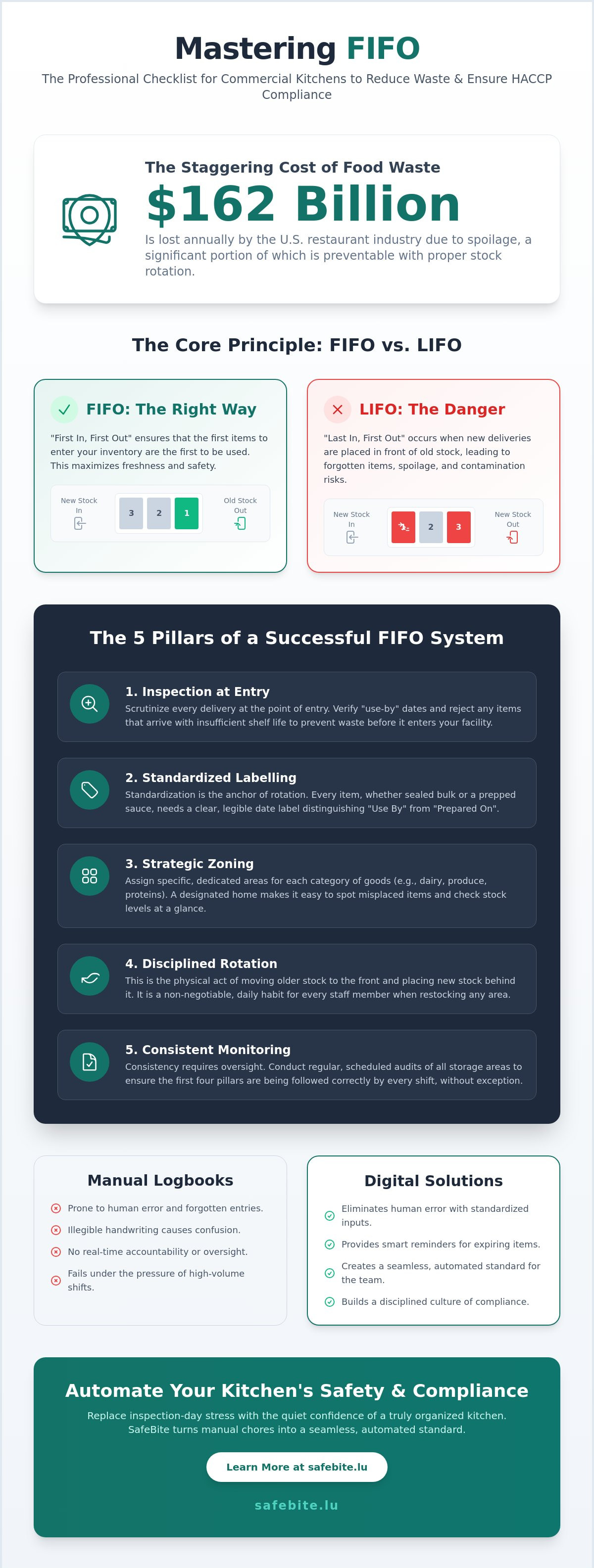
In the United States, food waste costs the restaurant industry an estimated $162 billion annually. A significant portion of this loss stems from inconsistent stock rotation, making a disciplined FIFO implementation in a commercial kitchen a critical financial priority rather than a mere storage suggestion. You've likely experienced the frustration of discovering expired inventory at the back of the walk-in or the specific anxiety that comes when a health inspector begins auditing your prep labels. It's difficult to maintain high standards when staff are under pressure and traditional paper logs fail to provide real-time accountability.
You deserve a system that works as hard as your line cooks do. This article provides a professional 2026 checklist designed to help you master the First In, First Out method, drastically reduce your COGS, and ensure total HACCP compliance. We will walk through the exact steps to modernize your storage protocols and discuss how digital oversight can turn a manual chore into a seamless, automated standard for your entire team. By moving toward a more proactive and technologically integrated approach, you can replace inspection-day stress with the quiet confidence of a truly organized kitchen.
Key Takeaways
- Establish a direct link between systematic inventory rotation and food safety to prevent bacterial growth and maintain HACCP standards.
- Identify the five core pillars of inventory management, focusing on rigorous inspection at delivery and standardized dating protocols.
- Utilize a practical 2026 checklist for FIFO implementation in a commercial kitchen to streamline your shelving and audit processes.
- Compare manual logs against digital solutions to see how technology eliminates human error and forgotten labels during high-pressure shifts.
- Implement smart reminders and digital HACCP tools to build a disciplined kitchen culture that maintains compliance and reduces waste automatically.
Understanding FIFO: The Foundation of Professional Food Safety
Successful FIFO implementation in a commercial kitchen begins with a fundamental commitment to the principles of stock rotation. This systematic inventory method ensures that goods received first are the first ones prepared and served. By prioritizing older ingredients based on their arrival or "best before" dates, you eliminate the risk of serving expired products. It is a simple concept; however, it requires disciplined execution to be effective in a high-pressure environment.
The relationship between stock rotation and food safety is absolute. Pathogenic bacteria, such as Listeria and Salmonella, require time to reach dangerous levels. When perishables sit too long in storage, they enter a zone of high risk. Proper rotation prevents this by ensuring no single item stays in your inventory for longer than intended. This is especially vital for high-risk categories like fresh dairy, raw proteins, and leafy produce where spoilage isn't always visible to the naked eye. Keeping these items moving is your first line of defense against foodborne illness.
Beyond safety, there is a clear financial incentive. Food waste costs the U.S. restaurant industry an estimated $162 billion annually, and a significant portion of this loss is preventable. When your team follows a strict rotation schedule, you significantly lower your Cost of Goods Sold (COGS) by reducing spoilage. Every piece of protein or carton of cream thrown away is direct profit leaking from your business. A disciplined system protects your margins by turning inventory into revenue before it becomes a liability.
FIFO vs. LIFO: Why the Alternative Fails
Last In, First Out (LIFO) occurs when staff simply place new deliveries in front of existing stock. This habit creates the "buried stock" phenomenon, where older ingredients are pushed to the back of the shelf and forgotten. These hidden items eventually spoil, creating a breeding ground for mold and bacteria that can spread to fresh arrivals. Cross-contamination becomes a constant threat when old and new stock mix without clear separation. In a professional kitchen, LIFO is a dangerous shortcut that leads to failed audits and compromised guest safety.
Alignment with Luxembourg Food Safety Standards
Maintaining a rigorous rotation system is a core requirement for compliance with Luxembourg food safety regulations. Local health authorities view FIFO as a prerequisite program within your broader HACCP plan. During a national health authority inspection, officials look for clear, legible labels that prove you're tracking "use-by" and "best before" dates. These dates serve as the legal anchor of your system. If you cannot demonstrate a clear trail of rotation, you risk heavy fines or a lower hygiene rating that can damage your reputation.
The 5 Pillars of a Successful FIFO System
A successful FIFO implementation in a commercial kitchen relies on more than just good intentions; it requires a structured framework that guides every interaction with inventory. Without a clear set of rules, the system inevitably breaks down during the rush of service. To maintain a disciplined kitchen culture and protect your bottom line, you must establish five fundamental pillars.
- Inspection: Every delivery must be scrutinized at the point of entry. Verify the "use-by" dates before the driver leaves the loading dock. Rejecting items that arrive with insufficient shelf life prevents waste before it even enters your facility.
- Labelling: Standardisation is the anchor of rotation. Every item, whether it's a sealed bulk bag or a prepped sauce, needs a clear, legible date.
- Zoning: Assign specific areas for specific goods. When products have a dedicated home, it's significantly easier to spot when something is out of place or nearing its limit.
- Rotation: This is the physical act of moving older stock to the front or top. It's a non-negotiable step for every staff member when restocking shelves or reach-ins.
- Monitoring: Consistency requires oversight. Regular audits ensure that the first four pillars are being followed correctly by every shift.
Standardising Your Labelling Protocol
Precision in labelling is the difference between safety and guesswork. In a professional environment, you must distinguish between "Use By" dates provided by the manufacturer and "Prepared On" dates for house-made items. While many kitchens traditionally used masking tape and markers, the 2026 trend has shifted toward digital labels. Digital systems eliminate the risk of illegible handwriting and provide a standardized format that everyone understands instantly. To ensure these pillars remain standing during the busiest dinner service, many managers rely on digital HACCP checklists to automate the verification process.
Strategic Storage Layout
The physical layout of your dry stores and walk-ins should do the work for you. Implementing a "Left-to-Right" or "Front-to-Back" flow ensures that staff naturally reach for the oldest items first. It's also vital to avoid over-packing shelves. Crowded storage areas prevent proper air circulation, which can lead to temperature fluctuations and premature spoilage. In freezers and walk-ins, maintaining space between items isn't just about rotation; it's about maintaining the integrity of the cold chain. Visibility is your greatest ally in preventing forgotten stock from becoming a financial loss.
Manual vs. Digital FIFO: Eliminating Human Error
Manual inventory management often rests on the assumption that every staff member is perfectly disciplined at all times. During a high-volume dinner service, this assumption frequently fails. Forgotten labels and missed rotations are common symptoms of a system that relies solely on human memory. In contrast, moving toward a digital model for FIFO implementation in a commercial kitchen replaces these individual lapses with a rigid, verifiable framework. It transforms stock rotation from a chore that might happen into a mandatory step that is always recorded.
Modern smart kitchens utilize tablet interfaces to track every item from delivery to prep. This digital transition ensures that inventory data is live and actionable. By integrating these systems with automated temperature monitoring, you create a comprehensive safety net for your perishables. If a walk-in fluctuates in temperature, the system can cross-reference which batches are most at risk based on their specific shelf life. This level of data-driven oversight is simply impossible to achieve with a clipboard and a pen.
The Problem with Paper Logs
Paper-based systems are notoriously vulnerable to "dry-labbing," which is the dangerous practice of falsifying records after the fact to appear compliant. In Luxembourg, health authorities are increasingly vigilant about the authenticity of records. Beyond the legal risks, paper logs physically degrade in humid, high-heat kitchen environments. Smudged ink or water-damaged pages make auditing nearly impossible during a busy shift. When an inspector asks for proof of rotation, a disorganized binder becomes a significant liability that suggests a lack of control over your food safety protocols.
Benefits of Digital FIFO Oversight
Digital platforms provide real-time alerts when specific stock is nearing its expiration date. This proactive vigilance allows chefs to adjust daily specials to utilize ingredients before they become a financial loss. For multi-site managers, centralized dashboards offer a way to monitor rotation across several locations from a single screen. Training also becomes more efficient through digital food safety checklists that guide staff through the rotation process step-by-step. These tools create timestamped accountability, ensuring that tasks are completed as scheduled rather than just when someone finds the time. The result is a disciplined kitchen culture where compliance is a frictionless part of the daily workflow.
The Ultimate FIFO Implementation Checklist
Moving from a conceptual understanding of stock rotation to a functional, daily reality requires a structured roadmap. A checklist transforms abstract safety standards into a series of manageable, repeatable actions. For a successful FIFO implementation in a commercial kitchen, you must address both the physical environment and the behavioral habits of your team. Follow these five steps to establish a high-performance system.
- Step 1: Conduct a Comprehensive Inventory Audit. Before introducing new protocols, you must know your starting point. Identify every item currently in storage and verify its "best before" or "prepared on" date. This initial purge ensures you aren't rotating already expired goods into your new system.
- Step 2: Optimise Your Infrastructure. Install shelving units designed for visibility and access. Whenever possible, use gravity-fed racks or shelving that allows for rear-loading. This physical setup makes it easier for staff to do the right thing than the wrong thing.
- Step 3: Implement the 'Pull, Place, Push' Method. Train your team on this specific workflow. When a new delivery arrives, they must pull the existing stock forward, place the new items at the rear, and push the older items back into the primary picking position at the front.
- Step 4: Integrate FIFO into Daily Duties. Rotation shouldn't be a special project. It must be a standard part of opening and closing checklists. If it isn't scheduled, it won't be sustained.
- Step 5: Transition to Digital Logs. Replace vulnerable paper binders with a tablet-based system. Digital records ensure you are 100% ready for an inspection at any moment, providing timestamped proof of your diligence.
To simplify this transition and maintain total oversight, you can deploy digital HACCP checklists that guide your team through these steps automatically.
Daily Operational Checks
Consistency is maintained through small, daily verifications. Every morning, a designated supervisor should verify that the oldest items remain at the front of every shelf in the walk-in and dry stores. They must also scan for any containers missing a clear label. If an item lacks a "prepared on" date or has passed its safety threshold, it must be discarded immediately without exception. These micro-audits prevent small errors from compounding into significant safety risks or financial losses.
Staff Training and Accountability
Effective rotation relies on a culture of precision. Start by conducting a focused, 5-minute FIFO huddle with every new hire to demonstrate the "Pull, Place, Push" technique in person. Rather than micromanaging, use random "Spot Checks" to verify compliance. If a staff member consistently fails to rotate stock, it often indicates a flaw in the training process or the storage layout rather than a lack of effort. By linking these habits to your broader kitchen operations management, you position FIFO as a core pillar of professional excellence rather than just another rule to follow. This approach fosters a sense of ownership and pride in maintaining a world-class kitchen environment.
SafeBite: Automating FIFO and HACCP Compliance
Transitioning from a manual system to a digital platform represents the final step in achieving a world-class FIFO implementation in a commercial kitchen. While physical organization and staff training provide the foundation, SafeBite’s digital HACCP platform provides the structural integrity needed to sustain these habits long-term. Our system acts as a vigilant partner, moving your operation away from reactive waste management and toward a proactive culture of safety. By digitizing your rotation logs, you replace uncertainty with verifiable data.
One of the most significant advantages of a digital approach is the use of smart reminders. These notifications ensure your team never misses a critical rotation check, even during the peak intensity of a weekend service. You gain the power of real-time monitoring, allowing you to see the health of your inventory at a single glance from any device. If a high-risk batch is approaching its expiration, the system alerts you before it becomes a hazard or a financial loss. This level of oversight turns food safety into a frictionless, automated standard.
Digital Logs That Inspectors Love
The days of frantically searching through smudged binders are over. SafeBite allows you to generate instant compliance reports that align perfectly with the Luxembourg Food Safety Authority guidelines. Our cloud-based dashboard eliminates the clutter of the traditional "compliance folder," providing a clean and professional interface that demonstrates total control to any visiting official. Every rotation and label is automatically time-stamped and verified, creating an immutable audit trail. This transparency not only protects your business during inspections but also builds trust with the national health authority by showing a commitment to modern safety standards.
Getting Started with SafeBite
Modernizing your kitchen shouldn't be a complex ordeal. You can set up your first digital FIFO checklist in under 10 minutes, tailoring the parameters to match your specific storage layout. The platform allows you to customize alerts for high-risk ingredients like seafood and poultry, ensuring these sensitive items receive the heightened scrutiny they require. By setting specific thresholds for different food categories, you ensure that your team focuses their attention where it matters most. Precision is no longer a matter of effort; it's a built-in feature of your kitchen’s workflow. To see how easy it is to secure your inventory and protect your margins, book a demo of SafeBite today and take the first step toward a fully digitized, compliant kitchen.
Securing Your Kitchen’s Future with Precision Rotation
Mastering stock rotation is more than a regulatory requirement; it's a strategic advantage that protects both your food quality and your bottom line. By establishing the five pillars of organization and following a structured checklist, you transform inventory management from a source of stress into a disciplined, automated standard. A successful FIFO implementation in a commercial kitchen ensures that your team stays focused on culinary excellence rather than the anxiety of an upcoming health audit.
SafeBite provides the tools necessary to make this transition seamless and sustainable. Our platform is already trusted by top Luxembourg hospitality brands to deliver 100% digital, paper-free compliance. With real-time alerts for expiration dates and critical temperature fluctuations, you can maintain total oversight of your facility from any location. Start Your Digital HACCP Journey with SafeBite today to eliminate waste and foster a culture of proactive safety. Your path to a modern, efficient kitchen is just one digital step away.
Frequently Asked Questions
What is the most important rule of FIFO implementation?
The fundamental rule of FIFO implementation in a commercial kitchen is that the first item placed into storage must be the first item removed for use. This principle ensures that you prioritize stock based on arrival or expiration dates rather than staff convenience. To execute this effectively, your team must physically move existing products to the front of the shelf before placing new deliveries at the rear.
How do I handle items that arrive with the same expiration date?
When items share an identical expiration date, you should prioritize them based on their arrival time. The stock that entered your facility first remains at the front of the rotation. This maintains a consistent flow and prevents older deliveries from being pushed back. If arrival times are also identical, ensure the physical arrangement remains consistent so that the team naturally pulls from the front-most position.
Can FIFO be used for non-perishable items in a commercial kitchen?
Yes, you should apply FIFO principles to non-perishable items like canned goods, dry spices, and paper products. While these items have a longer shelf life, they are still subject to packaging degradation and dust accumulation over time. Rotating dry stores ensures that your oldest inventory is used before the integrity of the packaging is compromised, which helps maintain a high standard of cleanliness throughout your entire storage area.
How often should I audit my FIFO system for compliance?
You should conduct micro-audits daily as part of your opening and closing procedures. A quick visual scan of high-risk areas like the walk-in and protein drawers ensures that the rotation is being maintained during busy shifts. Additionally, perform a comprehensive deep-dive audit once per week to verify that all labels are accurate and that no "buried stock" has accumulated in the back of your dry stores or freezers.
What happens if a health inspector finds an item out of FIFO order?
If an inspector discovers items out of rotation, it often signals a failure in your management control systems. While a single misplaced item might result in a minor warning, repeated patterns of poor rotation can lead to score deductions or a lower hygiene rating. In Luxembourg, health authorities look for these lapses as indicators of broader food safety risks, which may trigger more frequent follow-up inspections to ensure compliance.
Is digital FIFO software worth the investment for a small restaurant?
Digital FIFO implementation in a commercial kitchen is often more critical for small restaurants because they have thinner profit margins. The cost of food waste from even a few spoiled proteins can be significant. Digital systems provide the automated oversight that a small team often lacks during peak hours. By reducing spoilage and ensuring 100% audit readiness, the software typically pays for itself through lower COGS and reduced administrative labor.
How do I train kitchen staff who are resistant to new rotation methods?
Focus on the practical benefits, such as how a better system reduces frustration during the dinner rush. Demonstrate the "Pull, Place, Push" method in person and explain how it protects the restaurant's reputation. If resistance continues, introducing digital checklists can help by making the process a mandatory, timestamped task. This creates clear accountability and removes the ambiguity that often leads to staff cutting corners when they feel overwhelmed.
What is the best way to label decanted ingredients for FIFO?
The most effective method is using standardized, printed labels that include both the "Prepared On" date and the "Use By" date. Handwritten tape is often illegible and can fall off in humid environments. Ensure that labels are placed in a consistent location on every container so that staff can verify dates at a glance. Using color-coded labels for different days of the week is another proactive way to simplify visual identification during service.