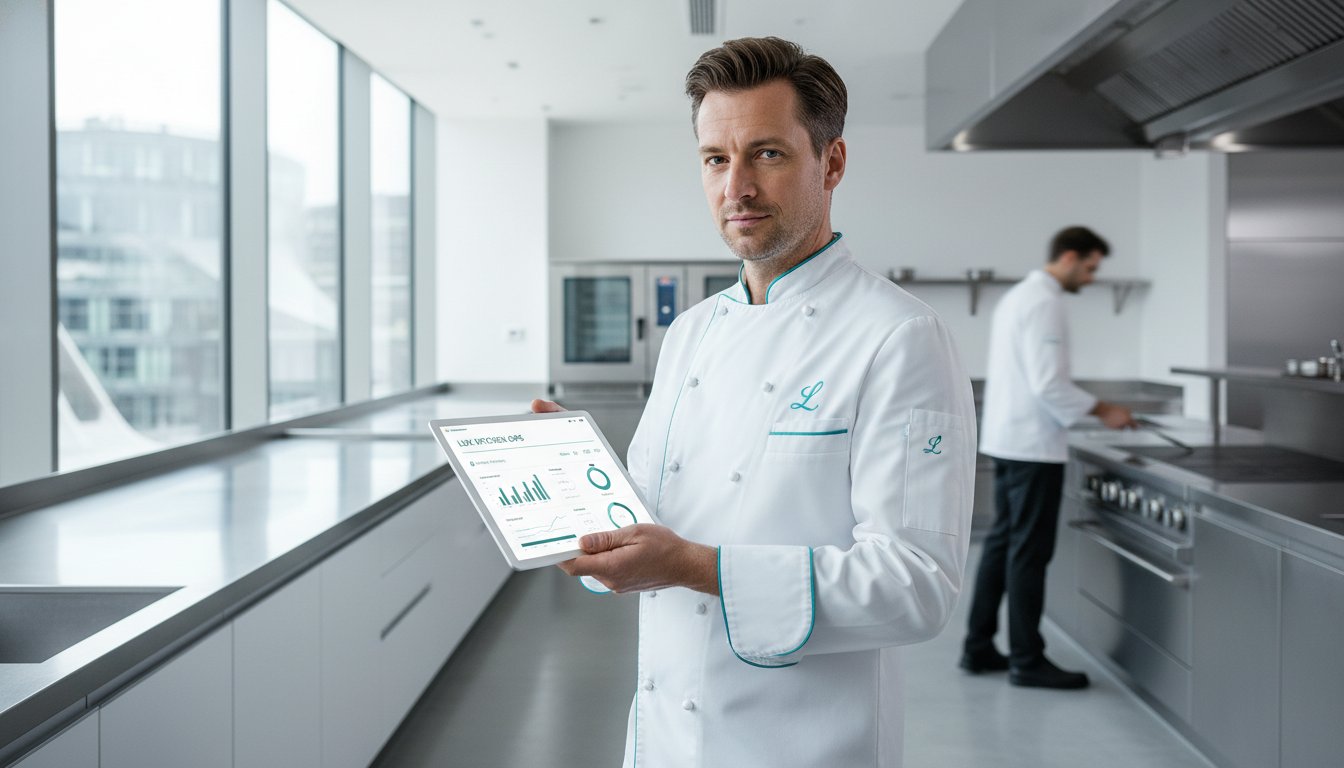
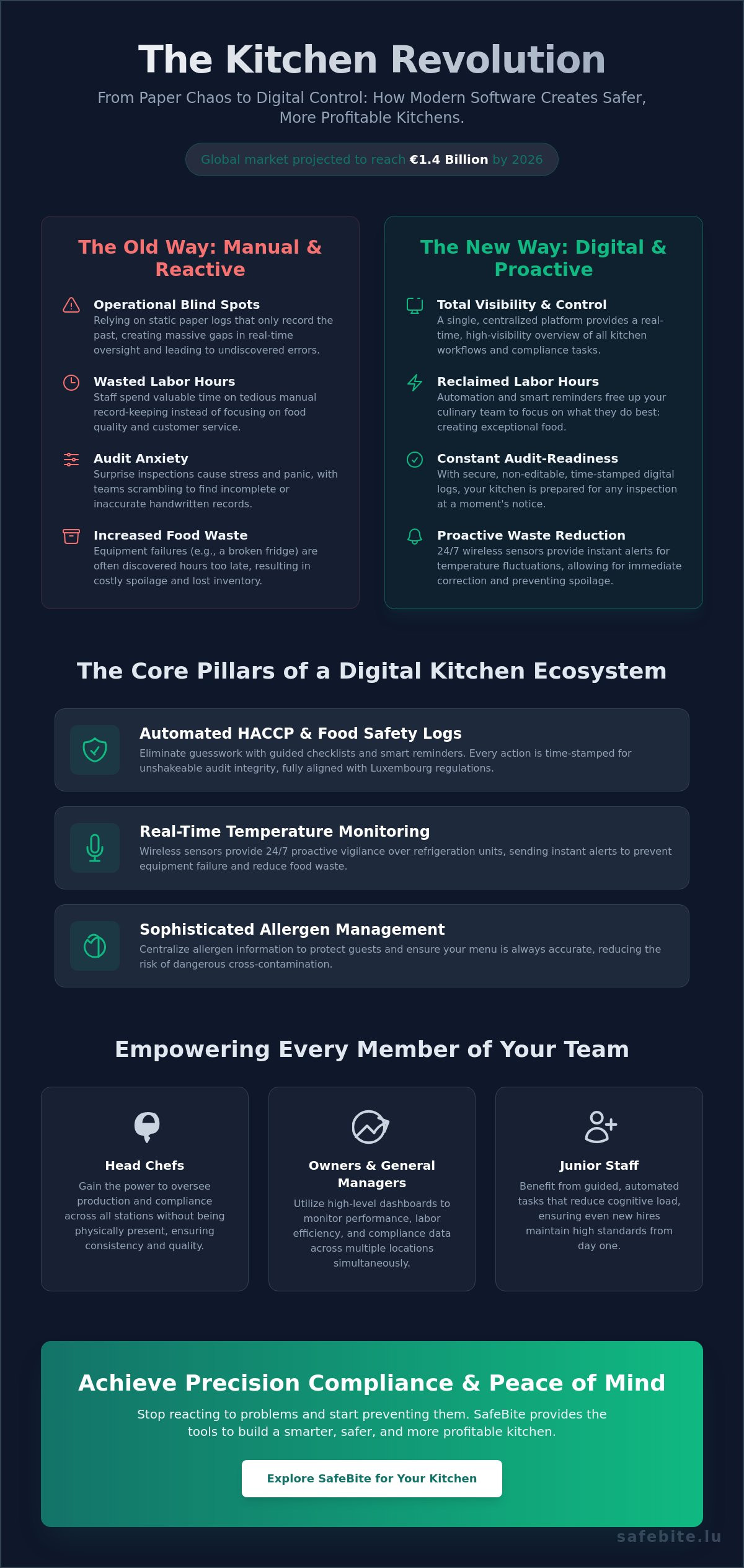
What if the most dangerous tool in your kitchen isn't a chef's knife, but a three-ring binder filled with handwritten temperature logs? You likely understand the weight of audit anxiety that hits during a surprise inspection, especially when you're unsure if staff followed every hygiene standard during the morning rush. It's exhausting to lose hours to manual record-keeping when you could be focusing on culinary quality. By integrating modern restaurant food safety software, you replace these operational blind spots with a steady sense of control. This transition is becoming the industry standard, as the global market for these digital solutions is projected to reach €1.4 billion by 2026.
This guide demonstrates how digital operations management transforms chaotic kitchens into streamlined, audit-ready businesses. You'll learn how to achieve total visibility across your locations and significantly reduce food waste through precise monitoring. We will explore the essential components of a modern kitchen, including digital HACCP checklists, automated temperature monitoring, and sophisticated allergen management tools. This shift doesn't just satisfy regulators; it builds a foundation for a more efficient and profitable operation that is prepared for any inspection at a moment's notice.
Key Takeaways
- Distinguish between basic checklist apps and a comprehensive digital ecosystem that centralizes every kitchen workflow into a single, high-visibility platform.
- Understand how automated HACCP logs and wireless temperature monitoring systems provide proactive oversight, ensuring your business remains audit-ready at all times.
- Evaluate the hidden costs of manual record-keeping and how integrated restaurant food safety software reclaims valuable labor hours for your culinary team.
- Identify the essential selection criteria for software that is both intuitive for staff and robust enough to support multi-site growth across Luxembourg.
- Explore how SafeBite provides precision compliance tools specifically designed to meet the operational demands of the modern hospitality industry.
What is Kitchen Operations Management Software?
Kitchen operations management software is a centralized digital ecosystem designed to unify every aspect of a commercial kitchen's workflow. It moves beyond the limitations of isolated tools and manual processes. While some businesses still rely on basic apps for simple tasks, a true management platform integrates everything from temperature monitoring to labor coordination into a single interface. It functions as a proactive guard, ensuring that food safety standards aren't just met, but are built into the very rhythm of the work day. By 2026, the reliance on cloud-based data has turned these systems into essential infrastructure for any hospitality business that values precision over guesswork. Utilizing professional restaurant food safety software allows operators to move away from reactive fixes toward a culture of proactive operational vigilance.
The Evolution from Paper to Digital Intelligence
The transition from the traditional clipboard era to tablet-based intelligence marks a fundamental shift in how kitchens operate. Paper logs are inherently static. They record what happened in the past without offering any ability to influence the present. Modern systems utilize real-time data flow to identify and resolve operational bottlenecks before they escalate. Instead of discovering a fridge failure hours too late, teams receive instant alerts that allow for immediate correction. Many successful operators in Luxembourg are now implementing digital food safety checklists to ensure that every task is verified and timestamped. This level of digital oversight transforms restaurant food safety software from a regulatory burden into a strategic asset that protects both the customer and the brand's reputation.
Who Benefits Most from These Systems?
While the advantages are clear, different stakeholders experience the value of these systems in unique ways. Head Chefs gain the ability to oversee production and compliance without being physically present at every station. Owners and General Managers utilize high-level dashboards to monitor performance and labor efficiency across multiple locations simultaneously. For independent restaurants, the software provides the professional structure of a large-scale franchise without the administrative overhead. Junior staff also benefit significantly. Guided, automated tasks reduce the cognitive load on new hires, ensuring that even the most inexperienced team members maintain high standards from day one. This consistency is vital for maintaining a friction-free environment where quality remains the top priority.
The Core Pillars of a Digital Kitchen Ecosystem
A resilient kitchen relies on more than just high-quality ingredients and skilled staff. It requires a structured digital framework that operates silently in the background. Modern restaurant food safety software serves as this framework, providing a cohesive environment where compliance and efficiency coexist. By moving away from fragmented paper logs, operators create a "single source of truth" that ensures every station follows the same high standards. This ecosystem isn't just about passing an inspection; it's about building a culture of precision that protects your guests and your bottom line.
Automated HACCP and Food Safety Logs
The transition to automated HACCP logs removes the burden of manual record-keeping from your culinary team. Smart reminders notify staff exactly when a task is due, ensuring that critical checks are never missed during a busy service. These digital entries feature non-editable time-stamps, which provide a level of audit integrity that paper logs simply cannot match. This level of transparency is essential for aligning with Luxembourg food safety regulations, where accuracy is a primary focus for inspectors. When every action is logged in real-time, your kitchen remains in a state of constant readiness, eliminating the stress of surprise visits.
Real-Time Temperature Monitoring and Waste Reduction
Wireless sensors provide a level of proactive vigilance that manual checks can't replicate. These sensors monitor refrigeration units 24/7, detecting equipment failures or temperature fluctuations the moment they occur. This technology shifts the management style from manual logging to exception-based management, where staff only intervene when the system flags a problem. The return on investment is immediate; preventing a single walk-in freezer failure can save thousands of Euro in wasted stock. Because Food safety is a shared responsibility, having automated systems ensures that environmental factors are controlled even when the kitchen is closed. Implementing a temperature monitoring system allows you to maintain perfect cold chain integrity without lifting a finger.
Strategic Allergen and Ingredient Oversight
Managing the 14 major allergens is one of the most complex tasks in a modern kitchen. Digital tools simplify this process by providing a dynamic database that links ingredients directly to menu items. This reduces the risk of human error in recipe management, ensuring that allergen information remains accurate even when suppliers change. Guests today demand transparency, and providing them with verified data instills a deep sense of confidence in your brand. By centralizing this information within your restaurant food safety software, you ensure that every server and chef has access to the same life-saving data. This precision prevents cross-contamination and ensures that your kitchen remains a safe environment for every customer.
The High Cost of Manual Kitchen Records
The financial burden of maintaining a paper-based system is often invisible until you calculate the total labor leak. Many operators view binders and clipboards as a "free" method of compliance, but the reality is quite different. When a head chef earning €35 per hour spends thirty minutes each day managing paperwork, you're effectively paying over €5,000 per year just for administrative data entry. This doesn't include the time spent by junior staff or the costs of physical storage. Manual records are the primary obstacle to achieving the efficiency promised by modern restaurant food safety software. By moving these tasks to a digital platform, you reclaim that lost time and redirect your most expensive labor toward culinary production and guest satisfaction.
Beyond labor costs, paper systems introduce a significant risk known as "pencil-whipping." This occurs when staff members falsify records by filling out entire sheets at the end of a shift rather than recording data in real-time. This practice creates a false sense of security and leaves the business vulnerable during inspections. While specific requirements vary, global standards like Oregon's 2026 Food Sanitation Rules demonstrate a growing regulatory focus on verifiable, contemporaneous documentation. Digital systems prevent this by requiring live entries, ensuring that your data is both accurate and legally defensible.
The Audit Anxiety Factor
Surprise inspections often trigger a wave of panic when records are kept on paper. Searching through dusty binders for a specific cleaning log from six months ago is a high-stress task that pulls management away from the floor. Contrast this with the experience of using professional restaurant food safety software, where a comprehensive audit report is generated with a single click. Digital systems build a culture of always-ready compliance. When you know your data is organized and accessible, the arrival of an inspector becomes a routine event rather than a crisis. This steady sense of control is invaluable for maintaining staff morale and operational continuity.
Human Error and Data Inaccuracy
Illegible handwriting and lost log sheets are more than just nuisances; they are serious liabilities. A missing temperature log can lead to an automatic fail during a hygiene audit, regardless of how well the kitchen is actually performing. Digital validation prevents these errors by blocking impossible data entries, such as a refrigerator temperature of 100°C. If a reading falls outside of safe limits, the system can instantly trigger a corrective action workflow. This ensures that problems are solved, not just recorded. Verifiable digital logs offer a level of legal protection that paper simply cannot provide, shielding your business from the catastrophic costs of non-compliance and potential foodborne illness outbreaks.
How to Select the Right Software for Your Kitchen
Selecting the ideal restaurant food safety software requires a balance between technical capability and practical utility. A platform might look impressive in a sales demo, but its true value is determined by how well it performs in the heat of a Saturday night service. The interface must be "chef-proof" and designed for mobile-first interaction, allowing staff to log data with minimal disruption to their workflow. Beyond daily use, the system should offer seamless scalability, ensuring that as your restaurant group expands across Luxembourg, your operational standards remain consistent and manageable from a central point.
Hardware integration is another non-negotiable factor for modern operations. Your software should communicate directly with wireless probes and sensors to eliminate manual data entry errors. This connectivity ensures that temperature readings are captured accurately and instantly. Finally, prioritize vendors that provide localized, responsive support. In a high-stakes environment, waiting days for a technical resolution isn't an option. Having a partner that understands the specific regulatory nuances of the local market ensures your team remains confident and compliant.
Critical Features Checklist for 2026
As technology advances, certain features have moved from optional to essential. Ensure any platform you consider includes these three pillars:
- Offline Mode: Many kitchens are located in basements or areas with inconsistent Wi-Fi. The software must allow staff to record data offline and sync automatically once a connection is restored.
- Multi-site Dashboard: For owners with several locations, a centralized view is vital. You need to see compliance scores and active alerts across your entire portfolio in real-time.
- Smart Alerts and Escalations: The system shouldn't just record a missed task; it should escalate the notification to management if a critical safety check remains incomplete after a set time.
A 3-Step Implementation Strategy
Transitioning to a digital system is an operational shift that requires a structured approach to ensure staff buy-in. Start by auditing your current workflows to identify the biggest paper-based pain points, such as time-consuming fridge checks or messy allergen logs. Next, pilot the software with a "champion" staff member who is technologically savvy. This internal advocate can help troubleshoot minor issues and demonstrate the benefits to the rest of the team. Finally, phase out paper records gradually. This methodical approach prevents the team from feeling overwhelmed and allows for a friction-free transition to a fully digital environment. To see how this looks in practice, you can explore our multi-site management dashboard and start streamlining your operations today.
SafeBite: Precision Compliance for Luxembourg Kitchens
SafeBite stands as the leading provider of restaurant food safety software tailored specifically for the Luxembourg market. While global platforms offer generic solutions, SafeBite is engineered to align with the rigorous standards of local authorities like ALVA and broader EU mandates. This localized expertise ensures that your kitchen remains compliant without the friction of navigating systems designed for other jurisdictions. The platform provides a centralized multi-site management dashboard, allowing restaurant groups to maintain uniform standards across every location. By consolidating digital HACCP checklists and automated monitoring into one interface, SafeBite provides the proactive oversight necessary for modern hospitality.
Precision is at the heart of our service. Our audit-ready reporting features allow you to generate comprehensive compliance documents with a single click, providing inspectors with clear, timestamped evidence of your safety protocols. This level of transparency builds trust with regulators and protects your business from the heavy fines associated with manual record gaps. Our support team operates with the same vigilance as our software, offering responsive assistance that understands the unique operational landscape of Luxembourg. We don't just provide a tool; we act as a reliable partner in your kitchen's long-term success.
Designed for the Realities of the Floor
Kitchens are high-pressure environments where every second counts. SafeBite is built to minimize screen time, ensuring that chefs spend more time cooking and less time navigating complex menus. The system uses intuitive automated reminders that prompt staff only when action is required, reducing the mental load on your team. This focus on utility ensures that compliance becomes a natural part of the workflow rather than an administrative distraction. Whether you're managing a Temperature Monitoring System for a walk-in cold room or using an Allergen Management Tool to protect guests, the interface remains simple and direct. SafeBite serves as the essential bridge between operational safety and business profit.
Ready to Modernize Your Kitchen?
The transition from paper-based chaos to digital precision is no longer a luxury; it's a strategic necessity for 2026. By replacing manual logs with a sophisticated restaurant food safety software ecosystem, you eliminate the risks of audit anxiety and human error. You move from a reactive state of "hoping for the best" to a proactive state of absolute readiness. This shift significantly reduces labor costs by reclaiming hours previously lost to paperwork and protects your inventory from equipment failures. Our team is ready to guide you through this digital transformation with reporting features that make every inspection effortless. Experience the confidence of a streamlined operation and see how our tools protect your brand every single day.
Secure Your Operational Future
The shift from manual paper logs to a digital kitchen ecosystem is a strategic move that defines the modern hospitality industry. By embracing this technology, you replace the burden of administrative paperwork with a system that offers proactive vigilance. You've explored how automated HACCP workflows and real-time temperature alerts prevent waste while ensuring your business remains audit-ready. These tools don't just check a box; they provide a foundation for scalable growth.
Implementing specialized restaurant food safety software allows you to generate inspection-ready reporting in seconds. This level of precision is essential for multi-site groups looking to maintain consistent standards across every location without increasing labor costs. When your data is centralized and verifiable, you gain the confidence to lead your team toward greater culinary heights. It's about moving from a state of reactive stress to one of steady, professional control.
Are you ready to transform your operational efficiency? Book a Free SafeBite Demo Today and discover how our platform provides the control and oversight your kitchen deserves. We are here to support your journey toward a more professional, streamlined, and profitable future.
Frequently Asked Questions
Is kitchen operations software mandatory in Luxembourg?
While using digital systems isn't strictly mandatory in Luxembourg, maintaining a robust HACCP plan is a legal requirement. The Luxembourg Veterinary and Food Administration (ALVA) requires precise documentation of food safety protocols. Utilizing professional restaurant food safety software is the most effective way to ensure your records are accurate, timestamped, and always available for inspection.
Can digital records really replace paper logs during a health inspection?
Digital records are fully recognized by health inspectors in Luxembourg and across the EU. As long as your digital logs are contemporaneous and demonstrate a clear history of corrective actions, they are often preferred over paper logs. Inspectors value the non-editable timestamps and organized structure that a digital system provides during a routine audit.
How long does it take to train staff on kitchen management software?
Most kitchen teams can become proficient with the software within a single day of use. Because the platform is designed with a mobile-first interface, the learning curve is minimal for staff already familiar with smartphones. Guided workflows and automated reminders ensure that even new hires can follow complex safety protocols without extensive classroom training.
What happens if the kitchen Wi-Fi goes down while using the app?
SafeBite includes a dedicated offline mode to handle connectivity issues in basement kitchens or areas with poor Wi-Fi signals. Staff can continue to log temperatures and complete checklists without an active internet connection. Once the device reconnects to a network, all recorded data automatically syncs to the central cloud server to maintain record continuity.
Is my data secure and compliant with EU privacy standards?
Your data is stored securely and is fully compliant with EU General Data Protection Regulation (GDPR) standards. We utilize encrypted cloud storage to protect your operational data and staff information. This digital security ensures that your records are safer from physical loss or unauthorized access than traditional paper binders kept in an open office.
Can I manage multiple restaurant locations from a single account?
You can manage an unlimited number of restaurant locations from a single centralized dashboard. This feature allows owners and area managers to monitor compliance scores and temperature alerts across their entire portfolio in real-time. It's the most efficient way to ensure high standards are maintained in every kitchen without having to visit each site daily.
How does the software help with allergen tracking and Natasha’s Law principles?
The software automates allergen tracking by linking specific ingredients to your digital menu items. This reduces the risk of human error when communicating dietary risks to guests, aligning with the core principles of Natasha's Law. Dynamic allergen management tools ensure that if a supplier changes an ingredient, the information is updated across your entire system instantly.
What is the typical ROI of switching to digital kitchen management?
The return on investment typically manifests through reduced labor costs and significantly lower food waste. By automating temperature monitoring with restaurant food safety software, you prevent the loss of expensive stock due to equipment failure. Additionally, reclaiming the time chefs previously spent on manual paperwork allows your team to focus on production, which directly improves your bottom line.