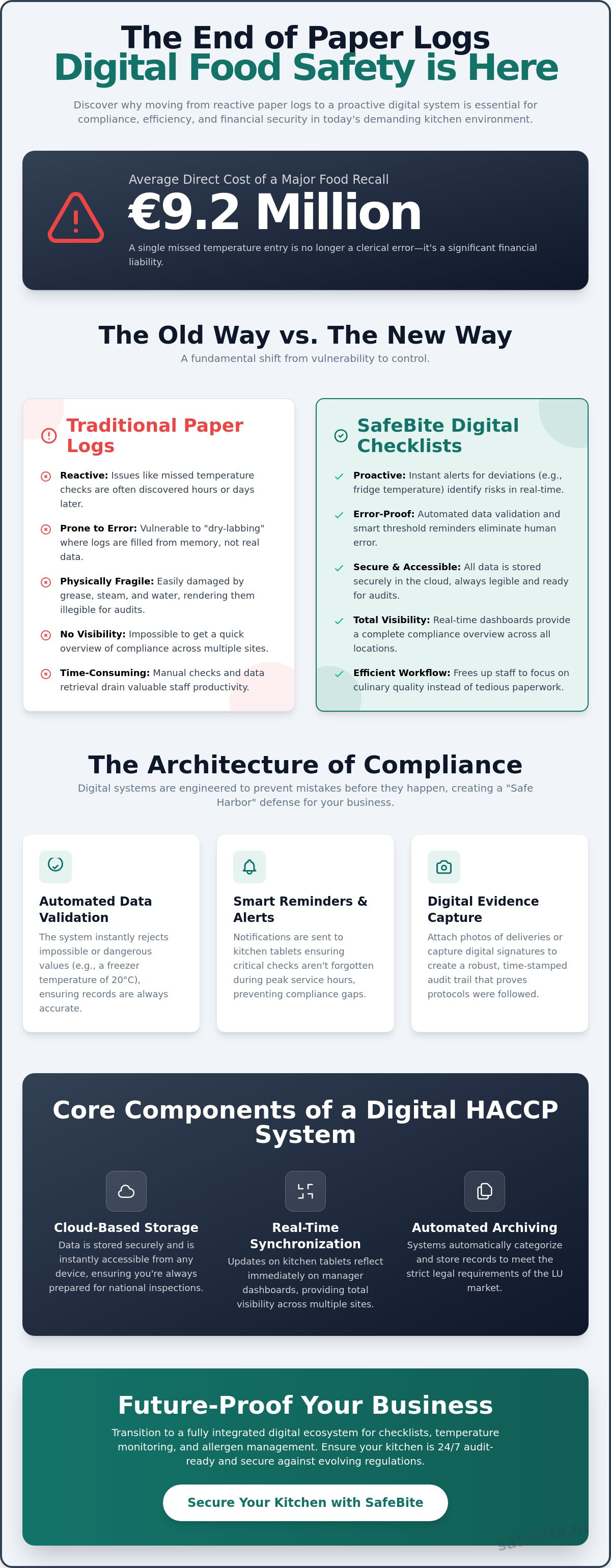
With the average direct cost of a major food recall now reaching approximately €9.2 million, a single missed temperature entry is no longer just a clerical error; it's a significant financial liability. You understand the pressure of maintaining a flawless kitchen while managing a busy team in Luxembourg. It's frustrating to face unannounced hygiene audits only to find that paper logs are incomplete or inaccurate. Manual checks take up valuable time that your staff should spend on culinary quality. Implementing digital food safety checklists allows you to move past these manual hurdles and secure your operations against the evolving regulatory demands of 2026, such as the preparation required for the new SQF Edition 10 standards.
We agree that food safety should feel like a controlled process rather than a constant source of anxiety. In this article, you'll discover how moving to a digital system ensures your kitchen remains 24/7 audit-ready while providing total visibility across multiple sites. We examine how automated record-keeping proves compliance and streamlines your workflow, allowing you to focus on growth with absolute confidence in your operational standards.
Key Takeaways
- Identify the shift from reactive paper logs to proactive digital alerts that identify risks before they become compliance failures.
- Discover how digital food safety checklists eliminate human error by utilizing automated data validation and smart threshold reminders.
- Learn why modern kitchen teams prefer digital interfaces that mirror familiar mobile applications to reduce technical resistance.
- Follow a strategic roadmap to map your existing HACCP plans to digital workflows with zero operational downtime.
- Gain better visibility across multiple sites by integrating checklists, temperature monitoring, and allergen management into a single dashboard.
Beyond the Clipboard: The Evolution of Digital Food Safety Checklists
The transition from paper binders to digital interfaces marks the most significant shift in kitchen management since the widespread adoption of the Hazard Analysis and Critical Control Point (HACCP) framework. In 2026, food safety is no longer a static requirement tucked away in a filing cabinet. It's a dynamic, time-stamped verification process that ensures every critical control point is monitored in real time. Unlike traditional methods, digital food safety checklists act as a proactive vigilance tool. They don't just record what happened; they alert you when something is about to go wrong.
Paper records are inherently reactive. You often discover a missed temperature check or an incomplete cleaning log hours, or even days, after the fact. By then, the risk has already escalated. Modern digital systems flip this narrative by providing instant feedback. If a walk-in fridge exceeds its threshold, the system triggers a notification immediately. This move from manual logging to automated verification allows kitchen managers in Luxembourg to maintain a state of constant readiness, transforming compliance from a stressful monthly hurdle into a seamless part of the daily workflow.
The Limitations of Traditional Paper Logs
Manual systems are vulnerable to a practice known as "dry-labbing," where staff members fill out logs at the end of a shift based on memory rather than actual measurements. This compromises the integrity of your safety data. Beyond human error, paper is physically ill-suited for the kitchen environment. Grease, steam, and water splashes frequently damage records, making them illegible during a surprise hygiene audit. Retrospective data analysis is also nearly impossible with physical files. Searching through months of paper to find a specific cooling log is a massive drain on productivity that modern kitchens can no longer afford.
The Core Components of a Digital HACCP System
A robust digital transition relies on several integrated technologies that work together to protect your business. These include:
- Cloud-based storage: All data is stored securely and is instantly accessible from any device, ensuring you're always prepared for national inspections.
- Real-time synchronization: Updates made on kitchen tablets reflect immediately on manager dashboards, providing total visibility across multiple sites.
- Automated archiving: Systems automatically categorize and store records to meet the strict legal record-keeping requirements of the LU market.
By implementing digital food safety checklists, you ensure that every entry is accurate and accounted for. This structured approach provides a level of oversight that paper simply cannot match. It gives you the quiet confidence that your kitchen is operating at the highest possible standard, day and night.
Maintaining these high standards also involves having the right equipment; for professional-grade kitchen tools that withstand the rigors of a busy environment, finomizek.hu offers a reliable selection.
The Architecture of Compliance: How Digital Systems Eliminate Human Error
Human error remains the single greatest vulnerability in any commercial kitchen. While paper logs rely on the memory and diligence of a stressed team, the architecture of digital food safety checklists is designed to prevent mistakes before they occur. This structural shift is part of the broader Modernization of digital food safety control, where technology replaces manual guesswork with precise, automated oversight. By implementing data validation rules, systems can instantly reject impossible or dangerous values, ensuring that your records are both accurate and compliant.
During peak service hours, compliance often takes a backseat to speed. Smart reminders solve this by sending notifications to kitchen tablets, ensuring that critical checks aren't forgotten in the heat of a busy Saturday night. These systems don't just ask for a number; they require digital evidence. Attaching a photo of a delivery temperature or capturing a digital signature creates a robust "Safe Harbor" defense. This level of detail proves that your operation followed every protocol, providing a layer of protection that a simple handwritten tick-box cannot offer.
Automated Alerts and Corrective Actions
When a temperature deviation occurs, the system doesn't just record the failure. It triggers an immediate corrective action task. For junior staff, this eliminates the "what do I do now?" confusion by providing clear, step-by-step instructions, such as moving stock to a secondary chiller. This ensures every non-compliance incident has a documented resolution, which is vital for maintaining high hygiene ratings in the Luxembourg market. Every action is time-stamped, creating an indisputable trail of proactive management.
Precision Through IoT and Sensor Integration
Integrating IoT sensors takes vigilance to a 24/7 level. Wireless probes monitor refrigerators and freezers every few minutes, removing the need for staff to perform manual checks four times a day. This creates a continuous, tamper-proof cold chain record that guards against equipment failure over weekends or holidays. Bluetooth probes sync directly to your digital food safety checklists to capture precise internal temperatures without the risk of transcription errors.
Maintaining this level of precision across your entire operation is simpler than you might think. You can explore how a multi-site management dashboard provides total visibility into these automated systems, ensuring your standards never slip regardless of where you are located.
Overcoming the Digital Friction Myth: Why Kitchen Staff Prefer Modern Logs
Resistance to new technology is the most common concern we hear from business owners. However, the reality of the modern kitchen floor tells a different story. Your team likely spends their breaks navigating complex social media interfaces; they're already digitally literate. When digital food safety checklists are designed with this same user-centric logic, the learning curve disappears. Instead of wrestling with a grease-stained binder, staff interact with a clean, intuitive interface that feels familiar and responsive.
This transition significantly reduces "compliance anxiety" across the board. In a paper-based system, the fear of a surprise inspection is constant because no one is 100% sure the logs are perfect. Digital systems replace this doubt with a sense of control and confidence. For head chefs, it provides "accountability without micromanagement." You don't need to hover over a commis chef to ensure the fridge was checked; the system provides a quiet, remote confirmation that the work is done. This allows leadership to focus on culinary creativity rather than administrative policing.
Simplifying the Workflow for Multilingual Teams
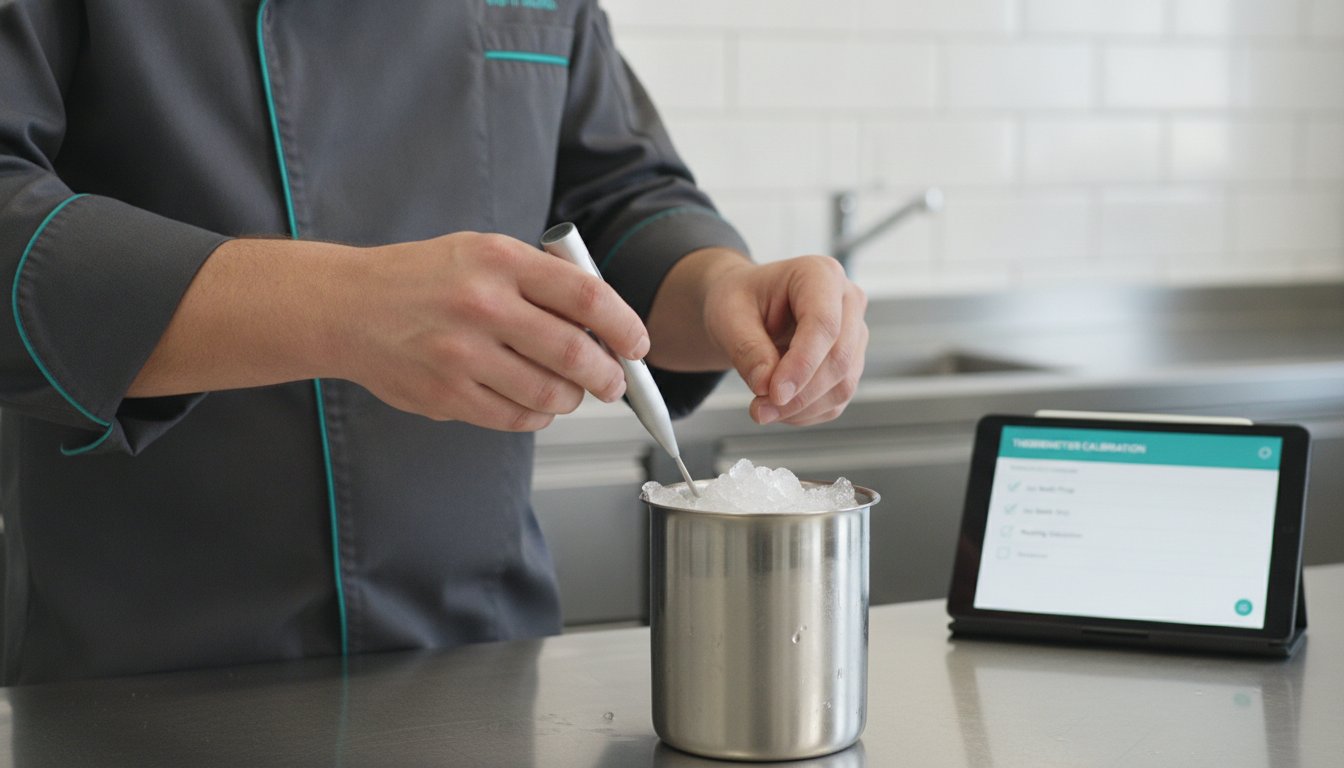
Luxembourg's hospitality sector relies on a diverse, international workforce. Dense text instructions in a single language often lead to confusion or ignored tasks. Digital systems solve this through visual prompts and universal icons. A red thermometer icon or a green checkmark transcends language barriers, making the expectations clear to everyone. This design reduces training time for new hires significantly. Instead of a week of shadowing, a new team member can follow the "just-in-time" training prompts built into the digital workflow. These interactive guides ensure that even the most complex HACCP tasks, such as calibrating a probe or managing a multi-stage cooling process, are completed with professional precision every time.
Empowerment Through Transparency
Transparency fosters a proactive culture rather than a punitive one. By using digital food safety checklists, staff gain immediate visibility into their own performance with a "done/not done" status for their shift. This clarity is empowering. It transforms food safety from a tedious chore into a verifiable achievement. Most importantly, digital logs protect your team. If a guest claims an illness, the time-stamped records and photos prove the staff followed every protocol perfectly. It acts as a digital shield, ensuring that diligent workers are never unfairly blamed for equipment failures or external supply chain issues.
From Implementation to Inspection: A Strategic Roadmap for Digital Transition
Transitioning your kitchen to a digital system is a strategic upgrade that requires a methodical approach to ensure zero operational downtime. While some providers suggest that you can be "ready to use instantly," a professional implementation involves more than just downloading an app. It requires a deliberate phase-in process that aligns your new digital food safety checklists with your specific menu and kitchen layout. By following a structured roadmap, you can replace the chaos of paper binders with a streamlined, high-precision workflow without missing a single temperature check.
A successful transition also involves configuring multi-site permissions, which is vital for businesses growing across Luxembourg. Regional managers need a high-level view of performance across all locations, while line cooks require a focused interface for their specific stations. This hierarchy ensures that the right data reaches the right people at the right time. When these roles are correctly defined, the system runs itself, providing you with the quiet confidence that every site is adhering to your national standards.
Phase 1: Mapping and Customization
The first step is a thorough audit of your current paper logs. You'll likely find redundant checks that waste time or missing data points that leave you vulnerable during an inspection. Use this opportunity to customize your checklist frequency and critical limits based on your specific high-risk ingredients. Defining user roles at this stage is essential. Assigning specific tasks to line cooks while reserving oversight for national operations directors ensures clear accountability and prevents unauthorized changes to your safety protocols.
Phase 2: Training and Live Deployment
We recommend a "shadow logging" period where paper and digital systems run in parallel for exactly one week. This allows your team to get comfortable with the interface while providing a safety net for your records. During this time, use your centralized dashboard to identify early adoption gaps or technical questions. When an inspector asks for records, navigate to the dedicated Audit Mode on your device to generate a clean, professional report that demonstrates full compliance in seconds. This feature provides a read-only, filtered view of your historical logs, ensuring the inspector sees exactly what they need without navigating your entire operational backend.
If you're ready to move beyond the clipboard and secure your kitchen's future, you can begin by exploring our digital HACCP checklists to see how they fit into your existing workflow.
Future-Proofing Your Business with the SafeBite Integrated Ecosystem
SafeBite positions your business at the forefront of national hospitality excellence by moving beyond isolated tools. While previous sections detailed the technical mechanics of sensors and the psychological benefits for your team, the true value lies in the synergy of the entire system. Your digital food safety checklists shouldn't exist in a vacuum. By integrating them with our allergen management tool and temperature monitoring system, you create a cohesive shield that protects every aspect of your operation from the loading dock to the guest's plate.
Centralized data allows for national-level performance benchmarking that was previously impossible with fragmented paper logs. You gain the ability to compare compliance trends across every site in Luxembourg, ensuring a steady and methodical approach to quality control. This 24/7 audit-ready status provides a level of peace of mind that allows you to focus on strategic growth rather than administrative firefighting. It transforms compliance from a static requirement into a dynamic asset for brand protection.
Scaling Standards Across Multiple Locations
Ensuring every unit follows the same high-level hygiene protocol is essential for brand consistency as you scale. The multi-site management dashboard identifies high-risk locations before an audit occurs, allowing for proactive intervention and support. This also streamlines national reporting for corporate social responsibility (CSR) goals, providing the transparency that modern consumers and regulators expect. You can move from managing individual kitchens to overseeing a unified, high-performance network with absolute precision.
The SafeBite Advantage: Precision and Support
Working with a national specialist means your technology is deeply rooted in the practical realities of local regulations and market conditions. SafeBite provides the proactive vigilance required to navigate the complexities of the industry with quiet confidence. Our platform is designed to be a friction-free extension of your internal team, offering the expert status and innovative tools needed to stay ahead of the curve. You can Explore SafeBite’s digital HACCP solutions to see how an integrated ecosystem can transform your kitchen standards today.
Securing Your Kitchen's Future with Proactive Oversight
The shift toward digital verification is a fundamental step in protecting your brand's reputation and operational efficiency. You now understand how digital food safety checklists eliminate the risks of incomplete records and provide a proactive shield against regulatory scrutiny. By utilizing real-time alerts for temperature deviations and missed tasks, your team can address issues before they escalate into costly liabilities. This transition offers the centralized oversight necessary to manage multiple sites with absolute precision, ensuring that your high standards are met across every unit in Luxembourg.
Our platform replaces traditional paper logs with 100% digital accuracy and provides a centralized dashboard for national-level compliance oversight. This system is designed to act as a seamless extension of your team, providing the quiet confidence that comes from total operational visibility. Request a demo of SafeBite’s digital food safety platform today to see how we can modernize your compliance workflow. We're here to support your commitment to excellence with a smarter, safer way to manage your kitchen.
Frequently Asked Questions
Are digital food safety checklists legally accepted by national health inspectors?
Yes, digital food safety checklists are fully recognized by national health authorities in Luxembourg. These systems meet all legal requirements for record-keeping by providing time-stamped, tamper-proof logs that are easily accessible during a surprise hygiene inspection. This transition ensures your business remains compliant with the same rigorous standards required for traditional paper-based HACCP documentation while improving data integrity.
How much time can my kitchen staff really save by switching from paper?
Switching to a digital system typically saves your team several hours of administrative work every week. By automating temperature recording and removing the need for manual filing and archiving, staff can focus on culinary quality rather than paperwork. This efficiency is particularly noticeable during peak service hours when manual logging often becomes a bottleneck for busy kitchen teams.
Do I need a constant internet connection for the checklists to work?
No, a constant internet connection isn't required for your daily logging tasks. Professional platforms allow staff to complete their digital food safety checklists offline, and the data synchronizes automatically with the cloud once the device reconnects to Wi-Fi. This functionality ensures your operations aren't interrupted by temporary connectivity issues or dead zones within the kitchen.
Can I customize the checklists to fit my specific restaurant menu?
You can fully customize every aspect of your checklists to match your specific menu and operational workflow. This includes setting unique critical limits for high-risk ingredients and scheduling specific tasks for different kitchen stations. This level of customization ensures the system supports your specific culinary standards rather than forcing you into a generic, one-size-fits-all template.
What happens to our data if we lose our tablet or device?
Your data remains completely safe even if a tablet is lost, damaged, or stolen. Because all logs are synchronized to a secure cloud server, you can simply log in from a new device to regain instant access to your entire compliance history. This provides a level of data redundancy and security that physical paper logs, which are vulnerable to loss or damage, cannot provide.
How secure is our food safety data on a digital platform?
Digital platforms utilize advanced encryption and automated backups to ensure your food safety data is far more secure than physical files. This technology protects your records from physical damage, such as kitchen fires or water leaks, which would destroy traditional binders. Restricting access through user-specific permissions further ensures that only authorized personnel can view or edit sensitive compliance information.
Will the system work for a single-location cafe as well as a large chain?
The architecture is designed to scale effectively for both independent cafes and large national chains. For a single-location business, it simplifies daily tasks on a single tablet; for larger organizations, the multi-site dashboard provides a high-level view of compliance across all units. This flexibility ensures every business size benefits from improved oversight and standardized hygiene protocols.
Does the software provide alerts if a staff member misses a scheduled check?
Yes, the system provides real-time alerts and notifications if a scheduled check is missed or a temperature threshold is exceeded. These proactive reminders help your team maintain vigilance throughout the shift, preventing small oversights from becoming major compliance issues. Managers can also receive automated summaries to identify any recurring training gaps within the team before an audit occurs.