What if the "free" paper logs in your kitchen are actually the most expensive tools you own? While many operators in Luxembourg rely on traditional binders to manage their HACCP requirements, this manual approach often conceals significant food safety compliance costs that drain your monthly margins. Between the labor hours required for manual temperature checks and the constant pressure of unannounced inspections by local health authorities, the administrative burden of staying compliant has never been higher.
This article will reveal how to stop these hidden financial drains and transform your safety protocols from a burdensome cost center into a streamlined operational asset. We will examine the real numbers behind manual record-keeping, from the loss of productivity to the high price of human error in documentation. You'll learn how modern digital tools create a friction-free path to audit readiness, ensuring your business is always prepared for scrutiny without the last-minute panic of a manual search. By embracing automated systems, you can secure your operations and ensure your team remains focused on delivering culinary excellence.
Key Takeaways
- Identify the hidden labor and material expenses that inflate your total food safety compliance costs beyond the price of simple paper logs.
- Understand the "cost of unreadiness" and how to eliminate the expensive labor spikes that occur during last-minute audit preparations.
- Discover how digital monitoring prevents financial loss by catching temperature deviations before they result in spoiled inventory or failed inspections.
- Streamline your multi-site operations with centralized dashboards that reduce audit durations and provide real-time visibility into every location.
- Learn to transform compliance into a predictable operational asset by replacing reactive manual systems with precise digital checklists and tools.
The "Paper is Free" Myth: Uncovering Hidden Food Safety Compliance Costs
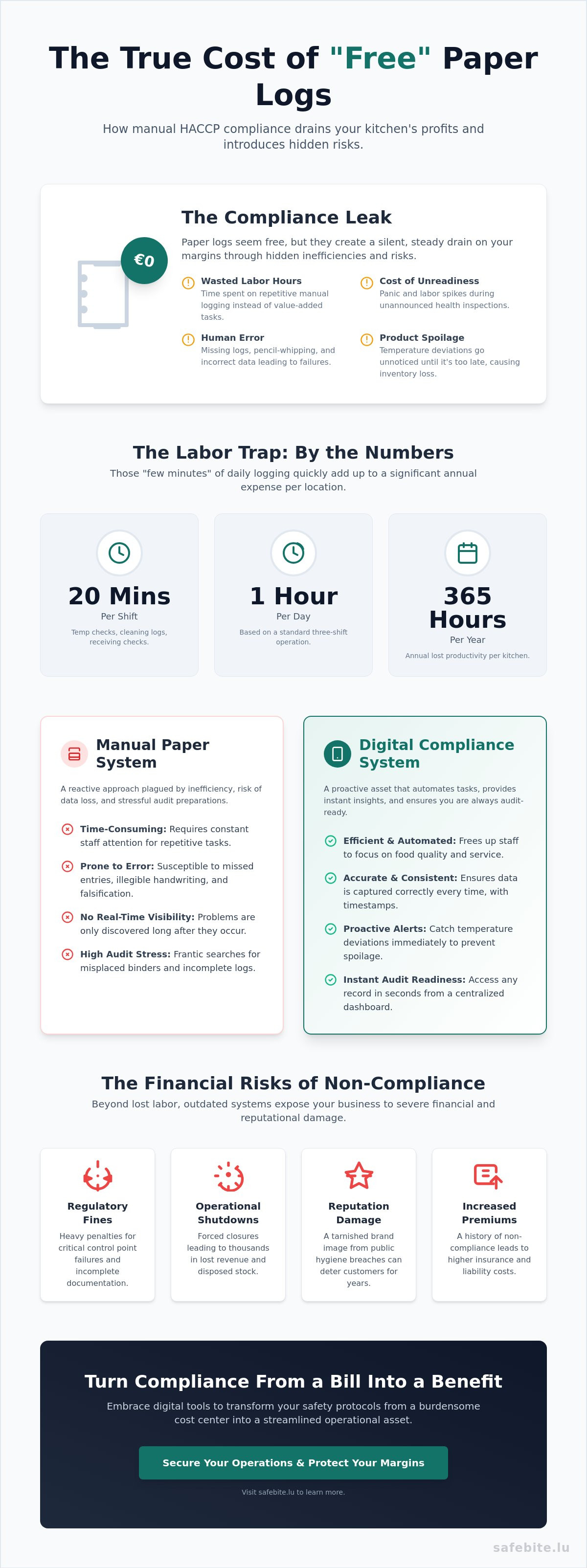
Many operators view paper logs as a zero-cost safety net. This is a fundamental misunderstanding of how food safety compliance costs actually function. In a modern commercial kitchen, compliance isn't just about having a binder on a shelf. It's the sum of every labor hour spent on documentation, every physical resource consumed, and every dollar spent on risk mitigation. When you only count the price of the paper, you ignore the "Compliance Leak." This leak represents the silent, steady drain on your margins caused by manual inefficiencies that no longer meet the precision required by 2026 regulatory standards. As the FDA increases its focus on real-time traceability, the gap between doing the work and proving the work has become a significant financial liability.
The Labor Trap: Calculating Manual Logging Hours
Calculating the true price of manual documentation begins with the clock. A typical kitchen staff member might spend ten minutes per shift on temperature checks, five minutes on cleaning logs, and five more on receiving checks. While twenty minutes per shift feels like a small fraction of the day, the math tells a different story. In a high-volume, three-shift operation, this equates to one hour of labor every single day. This adds up to 365 hours annually per location. When you multiply these hours by current hourly wages, the "free" paper system suddenly carries a heavy price tag. Digital tools offer a direct resolution by automating these tasks, allowing your team to focus on food quality rather than repetitive paperwork.
The Administrative Burden of Physical Records
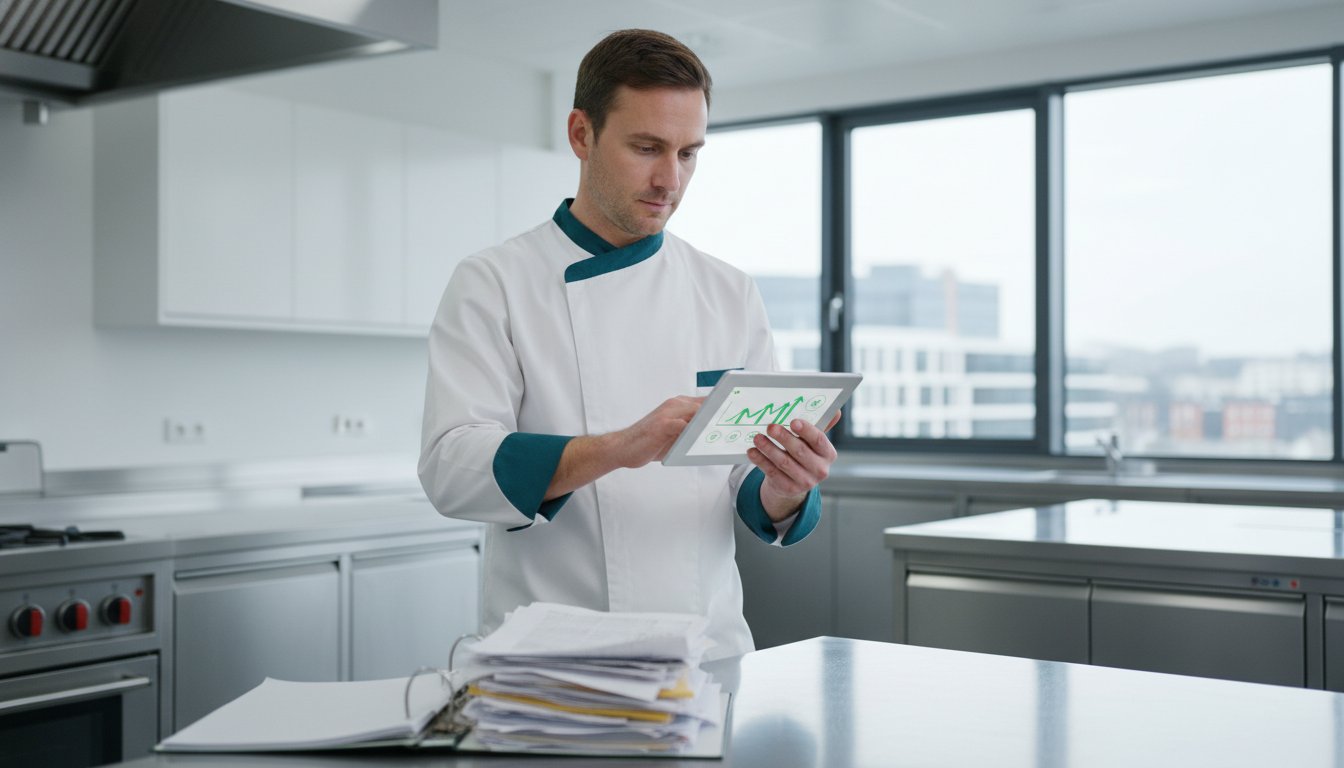
The administrative burden of physical records is equally draining. Managing a system based on Hazard Analysis and Critical Control Points (HACCP) with paper requires constant management oversight. Binders must be checked for completeness, signatures must be verified, and archives must be maintained for years to meet legal requirements. If an unannounced inspection occurs and a specific log is missing, the resulting panic creates an operational crisis. This "Cost of Unreadiness" is a direct result of relying on fragile, physical systems. By replacing paper HACCP logs with a digital platform, you recover management time and eliminate the risk of lost data. A digital dashboard provides instant visibility, ensuring your records are always organized, searchable, and ready for scrutiny without the last-minute stress of a manual audit search.
The Direct Financial Impact of Non-Compliance in 2026
Relying on outdated systems creates a vulnerability that extends far beyond a simple paperwork error. In 2026, European regulatory trends have shifted toward stricter enforcement and higher transparency, meaning the price of failure now carries a much heavier weight. When calculating your food safety compliance costs, you must include the potential for administrative fines and the long-term impact of a tarnished reputation. A single violation often triggers a cascade of secondary expenses, from mandatory re-inspections to the intensive labor required to rectify systemic failures. Modern health authorities now prioritize real-time data validation over historical paper logs, making the "Cost of Unreadiness" a significant financial liability for businesses that cannot prove their standards at a moment's notice.
Regulatory Fines and Operational Shutdowns
Fines are structured around the severity of the hygiene breach, but the true damage lies in forced closures. While a minor clerical error might result in a formal warning, a failure to document critical control points can lead to an immediate suspension of your operating license. If a high-traffic establishment is forced to close for even a few days, the lost revenue and the cost of disposing of potentially compromised stock can reach thousands of euros. The modern shutdown threshold is reached when a facility demonstrates an inability to provide real-time corrective actions for critical temperature deviations. This makes immediate data access an operational necessity rather than a luxury for maintaining your license to operate.
Insurance Premiums and Legal Liabilities
Your compliance history serves as a risk profile for insurers and financial partners. A recorded hygiene breach or a failure to manage allergens can trigger a sharp increase in annual premiums, as it signals a lack of professional oversight. In the event of a foodborne illness claim, legal defense costs can quickly escalate without robust documentation. Digital records act as "legal receipts," providing a time-stamped, unalterable history of your safety protocols that can be used to prove due diligence. Implementing a Multi-site Management Dashboard ensures that these records are always available, providing a digital paper trail that protects your brand from the unpredictable financial fallout of litigation.
Manual vs. Digital: A Comparative Cost Analysis
Operators often hesitate at the subscription cost of a digital platform. It's easy to view a monthly bill as an added expense, but this upfront investment is actually a cost-recovery tool. Manual systems create a persistent, invisible drain on your capital through labor hours and preventable errors. To truly evaluate food safety compliance costs, you must account for the "Error Rate Cost." This represents the price of human fallibility, such as a missed cooling log that results in a batch of discarded stock. Industry benchmarks in 2026 demonstrate that the long-term expense of implementing preventive systems is significantly lower than the immediate financial fallout of a single safety failure. Digital systems don't just record data; they actively protect your margins and lower overall food safety compliance costs over time.
Waste Reduction and Inventory Protection
A single walk-in fridge failure doesn't just ruin a weekend; it can destroy your monthly profit. Without a Temperature Monitoring System, a malfunction on a Sunday night might go unnoticed until Monday morning. This leads to thousands of euros in spoiled inventory and a likely forced closure. Statistics show that over a third of restaurant hygiene failures are linked specifically to inadequate temperature documentation. Automated alerts provide a proactive resolution by notifying management the moment temperatures drift outside of safe parameters. Similarly, using an Allergen Management Tool prevents the waste associated with expensive meal remakes and mitigates the high legal risks of cross-contamination. Precision logging ensures that inventory is handled according to strict shelf-life standards, which maximizes the utility of every raw ingredient you purchase.
Staff Training and Turnover Efficiency
High turnover rates in the hospitality sector make complex paper-based HACCP folders a training nightmare. Teaching a new hire to navigate a thick binder of forms is time-consuming and prone to error. The transition from paper to digital isn't just about saving resources. It's about saving time. In contrast to binders, digital food safety checklists offer an intuitive experience that guides the user through each task. This reduces the hours spent on onboarding and ensures that standards remain consistent regardless of staff changes. Removing the burden of tedious paperwork also provides a significant morale boost for your kitchen team. They want to focus on culinary quality, not spend their shifts filling out spreadsheets. By digitizing these requirements, you empower your staff to work more efficiently and with greater confidence in their results.
Audit-Proofing Your Budget: Strategic Cost Reduction
Strategic budgeting in 2026 requires a shift from reactive spending to proactive investment. Digital readiness directly influences your food safety compliance costs by reducing the billable hours of external inspectors. When an auditor arrives, every minute spent searching for physical paper logs increases the final invoice. By maintaining a digital environment, you ensure that required documentation is accessible within seconds. This level of "Continuous Compliance" eliminates the periodic need for expensive third-party consultants who are often brought in to fix systemic record-keeping issues before an audit. Instead of paying for last-minute repairs, you invest in a system that remains audit-ready every day of the year.
Automated reporting also saves a General Manager significant time every month. This is time reclaimed for staff development and operational improvements. Strategic cost reduction isn't about cutting corners. It's about removing the administrative friction that makes compliance feel like a burden. When your records are generated automatically, you remove the risk of human error and the subsequent financial penalties that follow. You can explore our Multi-site Management Dashboard to see how centralized reporting simplifies your daily oversight.
Centralizing Multi-Site Compliance Operations
Managing multiple locations traditionally involves high travel and time costs. Regional managers often spend hours driving between sites just to verify that temperature logs are being completed correctly. This manual verification model is both expensive and prone to oversight. In fact, 62% of multi-unit chains have been cited for incomplete supplier traceability records under FSMA 204. The "Remote Oversight" model allows you to manage 10 or more sites from a single dashboard. This level of visibility ensures that standards are met across the entire organization without the need for constant physical travel. Implementing the best HACCP software for your operation provides the scalability needed to grow without proportionally increasing your administrative overhead.
Automated Monitoring as a Long-Term Asset
The shift from reactive fixing to proactive maintenance is a hallmark of an efficient kitchen. Data trends from a Temperature Monitoring System help you identify failing equipment before a total breakdown occurs. If a compressor is struggling to maintain a steady temperature, the data will show a gradual drift long before the unit fails. This early warning allows for scheduled repairs, which are significantly cheaper than emergency call-outs and lost inventory. Automated temperature logs provide 24/7 peace of mind, ensuring that your stock is protected even when the kitchen is closed. This constant vigilance transforms your safety protocols into a long-term operational asset that protects your bottom line every hour of the day.
SafeBite: Turning Compliance from a Bill into a Benefit
SafeBite is engineered to plug the "Compliance Leak" that drains the margins of modern food businesses. By replacing the unpredictable nature of manual systems with a streamlined digital platform, you transform your safety protocols into a predictable operational asset. Instead of facing sudden labor spikes before an audit or paying for emergency equipment repairs, you benefit from a subscription model that stabilizes your food safety compliance costs. Precision replaces guesswork. This shift allows you to move away from a reactive "cost center" mindset and toward a model of proactive vigilance where every recorded data point strengthens your brand's integrity.
The platform ensures you remain "Inspection Ready" at all times without the traditional administrative overhead. By centralizing your data, SafeBite allows you to accurately forecast and manage your food safety compliance costs without the volatility of manual systems. You no longer need to worry about the $127 million in penalties issued by the FDA because your system is designed to catch errors before they become violations. It's a professional, polished extension of your team that works silently in the background to maintain control.
Real-Time Oversight and Error Prevention
The SafeBite dashboard provides an instant "Health Check" of your entire kitchen operation. At a glance, management can see which tasks are complete and which require immediate attention. This level of visibility is essential for fast-paced kitchen environments where human oversight is a constant risk. The automated alert system acts as a digital safety net, triggering notifications the moment a temperature threshold is breached or a cleaning log is missed. This immediate resolution prevents costly human errors from escalating into expensive inventory losses or hygiene breaches. The interface is purposefully simple, ensuring that staff can complete their Digital HACCP Checklists in seconds without disrupting the flow of service.
Future-Proofing for 2026 Standards
As regulatory requirements like FSMA Rule 204 and the updated Food Code demand higher levels of traceability, SafeBite keeps your business ahead of the curve. The platform is built to align with the latest national food safety regulations, ensuring that your documentation meets the rigorous standards of 2026. Whether you are managing a single restaurant or a growing multi-unit chain, the system scales seamlessly with your business. You can add new locations to your Multi-site Management Dashboard with ease, maintaining a consistent standard of safety across your entire organization. This technological readiness protects your bottom line and builds lasting consumer trust in an increasingly scrutinized industry. Optimize your compliance costs with SafeBite today and experience the confidence of a truly audit-ready kitchen.
Secure Your Operational Future
Moving beyond paper logs is a fundamental shift in how successful businesses manage their food safety compliance costs. By eliminating the administrative friction of manual binders, you reclaim hundreds of labor hours and remove the persistent threat of human error. Precision pays for itself. Real-time monitoring has been shown to reduce food waste by up to 20%. This ensures your inventory remains protected even when you aren't on-site, shifting your budget from reactive repairs to proactive growth.
Achieving 100% transparency through audit-ready dashboards gives you the confidence to face any unannounced inspection with ease. This level of control transforms your safety protocols into a competitive advantage rather than a recurring bill. With national support for hospitality compliance, the path to a more efficient and resilient kitchen is clear. Stop leaking profit and start your digital HACCP transition with SafeBite. You have the tools to build a safer, more profitable future for your team and your guests.
Frequently Asked Questions
Is digital HACCP software more expensive than paper logs?
While paper logs appear to have a zero-dollar entry price, their total food safety compliance costs are almost always higher than digital alternatives. Manual systems rely on expensive labor hours for data entry and carry the heavy financial risk of human error or missing records. Digital software replaces these unpredictable drains with a steady, manageable subscription that recovers lost time and protects your margins.
Can food safety software really help me pass a health inspection?
Digital systems significantly improve your inspection outcomes by ensuring that all records are complete, time-stamped, and instantly retrievable. Inspectors value the transparency of unalterable logs and the ability to see real-time corrective actions. This level of organization eliminates the panic and citations associated with missing or illegible paper binders.
How much time can my kitchen staff save by switching to digital checklists?
Kitchen teams typically save approximately twenty minutes per shift by moving away from manual documentation. Over the course of a year, this adds up to hundreds of hours that can be redirected toward culinary quality and customer service. Digital checklists guide staff through their tasks with intuitive prompts, making the process faster and more accurate than traditional methods.
What are the most common hidden costs in manual food safety management?
The most significant hidden costs include the labor spent on physical record-keeping and the administrative time required for management to verify and archive binders. You must also account for the "cost of unreadiness," which includes the labor spikes that occur when teams scramble to organize records before a scheduled audit. These inefficiencies create a constant, silent leak in your operational budget.
Does digital compliance help reduce food waste costs?
Yes, implementing a Temperature Monitoring System can reduce food waste by up to 20% through real-time alerts. These systems notify management the moment a refrigeration unit drifts out of the safe range, allowing for corrective action before inventory is lost. Precision logging also ensures that ingredients are used within their optimal shelf-life, maximizing the value of your raw materials.
Is there an upfront cost for implementing a system like SafeBite?
Implementation involves a structured transition where your existing paper workflows are converted into efficient digital checklists. Most operators find that the time recovered from labor-intensive manual logging quickly balances the initial setup. This transition is designed to be seamless, ensuring your kitchen stays operational while you modernize your safety protocols.
How does automated temperature monitoring affect my insurance premiums?
Maintaining a digital history of your safety protocols demonstrates a high level of due diligence to your insurance provider. This proactive stance can lead to more favorable risk assessments, as it proves you have a reliable system to prevent foodborne illness and equipment failure. Many insurers view digital records as essential "legal receipts" that protect against fraudulent or unsubstantiated claims.
What happens to my compliance costs if I open a second location?
Expanding your business doesn't have to mean doubling your administrative burden. A Multi-site Management Dashboard allows you to oversee multiple locations from a single interface, preventing your food safety compliance costs from scaling linearly with your footprint. You can maintain high standards across all sites without the need for constant travel or manual verification at each individual kitchen.