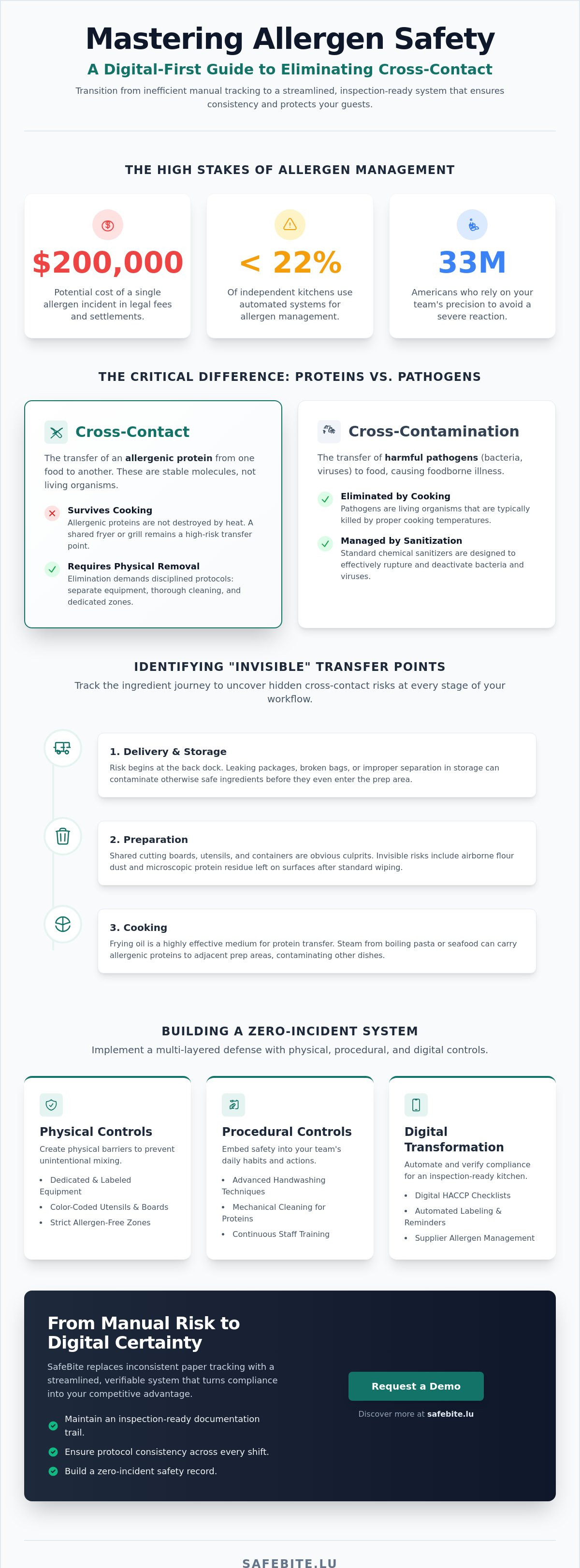
A single allergen incident can cost a restaurant up to $200,000 in legal fees and settlements, yet fewer than 22% of independent kitchens currently use automated systems to manage this critical risk. You already understand that "best efforts" aren't sufficient when 33 million Americans rely on your team's precision. The persistent fear of a severe reaction or a legal liability claim is a heavy burden, particularly when high staff turnover makes manual oversight feel impossible. Reducing risk of allergen cross-contact requires more than just a clean workspace; it demands a disciplined, digital-first approach to kitchen management.
This guide helps you master the technical strategies and digital protocols necessary to eliminate these hazards in commercial food environments. We'll show you how to transition from inefficient paper-based tracking to a streamlined, inspection-ready system that ensures consistency across every shift. By integrating the latest 2026 regulatory updates, including California SB-68 requirements, you'll build a zero-incident safety record while maintaining the high-speed workflow your business demands. You can expect a deep dive into automated labeling, precise separation techniques, and the digital tools that turn compliance into a competitive advantage.
Key Takeaways
- Understand the fundamental difference between cross-contact and cross-contamination to ensure your safety protocols target proteins rather than just pathogens.
- Identify "invisible" transfer points within your workflow and apply technical strategies for reducing risk of allergen cross-contact during peak service hours.
- Establish high-precision physical controls using dedicated equipment zoning and color-coded systems to prevent unintentional ingredient mixing.
- Replace inconsistent manual tracking with digital HACCP checklists and automated reminders to maintain an inspection-ready documentation trail.
- Optimize your staff training by shifting from basic hygiene to advanced mechanical cleaning methods designed specifically for allergen protein removal.
Defining Allergen Cross-Contact in the Professional Kitchen
Precision in terminology is the first step toward a zero-incident kitchen. While many professionals use the terms interchangeably, Defining Allergen Cross-Contact requires distinguishing it from biological cross-contamination. Cross-contact occurs when an allergenic protein is unintentionally transferred from one food or surface to another dish. Unlike bacteria, these proteins don't disappear through traditional cooking methods. They remain as physical residues that can trigger life-threatening reactions even in microscopic quantities.
Standard sanitization protocols often fall short in this area. Most chemical agents are designed to rupture the cell walls of bacteria or deactivate viruses, but they don't necessarily break down the molecular structure of proteins. If a kitchen focuses solely on hygiene, it might leave behind invisible traces of milk, peanuts, or sesame. In the 2026 hospitality environment, the legal stakes for undeclared allergens have reached a new peak. Regulators now view trace amounts of allergens with the same severity as pathogen outbreaks, making reducing risk of allergen cross-contact a core pillar of modern food safety management.
The Scientific Difference: Proteins vs. Pathogens
Bacteria are living organisms that usually die when exposed to high heat or chemical sanitizers. Allergenic proteins are fundamentally different; they are stable molecules that often remain intact and dangerous even after rigorous cooking. This reality means a shared fryer or a poorly cleaned cutting board can still harbor enough protein to trigger anaphylaxis. Because the threshold dose for some highly sensitive individuals is microscopic, professional kitchens must move away from "clean enough" toward a strict zero-transfer policy. Allergen proteins are remarkably resilient and frequently maintain their structural integrity even in high-heat environments like commercial ovens or deep fryers.
Regulatory Expectations in Luxembourg
European standards have become increasingly rigorous, particularly concerning the Luxembourg food safety authority guidelines. Local inspectors no longer accept vague "may contain" warnings as a substitute for robust, documented kitchen protocols. There is a clear shift from voluntary disclosures to mandatory precautionary measures in all professional settings. Your HACCP plan serves as your primary defense during national inspections. It provides the necessary documentation to prove due diligence in reducing risk of allergen cross-contact through verifiable separation, dedicated equipment, and logged cleaning cycles that prioritize protein removal over simple sanitization.
Identifying High-Risk Zones for Cross-Contact
Reducing risk of allergen cross-contact begins with a methodical audit of your kitchen's physical layout. You must track the journey of every ingredient from the moment it crosses your threshold until it reaches the guest. This process often reveals "invisible" transfer points that manual cleaning alone cannot address. For instance, shared fryers are a high-risk zone because frying oil acts as a medium for protein transfer. Steam from a boiling pot of pasta or a seafood steamer can also carry wheat or shellfish proteins to adjacent prep areas. Ambient risks, such as airborne flour dust in a bakery, represent a significant challenge because they bypass traditional surface-level cleaning. Effective procedural controls for allergen safety must account for these airborne and liquid-based threats.
Your safety chain is only as strong as your weakest supplier. Inaccurate labels or undeclared ingredient changes at the source create immediate vulnerabilities. Mastery of managing supplier allergen information is essential to ensure that mislabeled deliveries don't compromise your entire menu. Identifying these zones is easier when you use a dedicated allergen management tool to visualize and track high-risk areas across your facility.
Storage and Delivery Vulnerabilities
The risk of cross-contact starts at the back dock. Leaking packaging from a milk delivery or a broken bag of flour can contaminate an entire pallet of "safe" ingredients. You should enforce a strict vertical storage policy where all known allergens are stored on the lowest shelves to prevent accidental spills from dripping onto ingredients below. Every raw ingredient must be labeled immediately upon arrival, including a clear transcription of any "may contain" warnings from sub-suppliers. These warnings are not mere suggestions; they are critical data points that must follow the product through your internal supply chain.
Shared Equipment and the "Pass" Zone
Shared utensils and cutting boards are the most common culprits of protein transfer. Even a clean-looking knife can harbor enough residue to trigger a reaction if it hasn't undergone mechanical scrubbing. The plating area, or "the pass," is a frequent site of last-minute errors. Shared garnish bins, condiment dispensers, and even the cleaning cloths used to wipe plate rims can introduce allergens just seconds before a dish is served. Reducing risk of allergen cross-contact at the pass requires dedicated zones for allergen-free plating and a strict "one cloth, one plate" rule to ensure the final touch is as safe as the initial prep.
Physical Controls: Dedicated Equipment and Zoning
Physical barriers provide the most reliable defense against protein transfer in a high-volume environment. Establishing a "Zoning" strategy involves designating specific areas of the kitchen exclusively for allergen-free preparation. These zones shouldn't just be mental boundaries; they require physical separation and dedicated tools to be effective. When you're reducing risk of allergen cross-contact, your layout must reflect a commitment to total isolation. This approach aligns with the latest FDA guidance on allergen cross-contact, which emphasizes that even minor lapses in physical control can lead to product adulteration and severe safety risks.
For equipment that cannot be dedicated, such as large stand mixers or heavy-duty ovens, you should implement a "Double-Wash" protocol. This involves an initial mechanical scrub to physically dislodge proteins, followed by a high-temperature cycle in a commercial dishwasher. To decide which zones require the strictest isolation, start by creating an accurate allergen matrix for your current menu. This data-driven foundation allows you to allocate limited space to the highest-risk allergens, ensuring your physical controls are both practical and precise.
Implementing a Color-Coded System
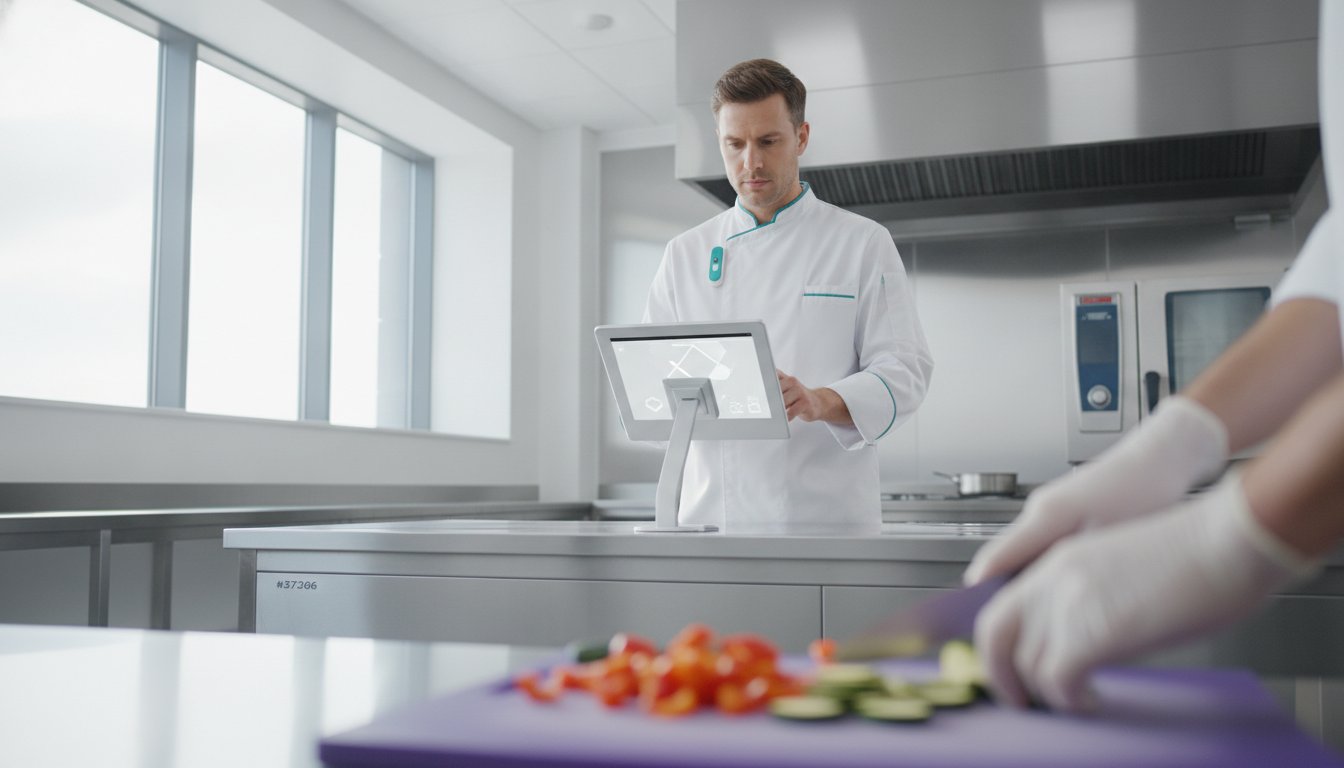
Color-coding is a visual shorthand that eliminates guesswork for your team. Most professional kitchens now adopt purple as the universal standard for "free-from" equipment, including cutting boards, knives, and tongs. You must train your staff to recognize that these tools never leave their designated zone. To maintain the integrity of these boundaries, store dedicated allergen-safe equipment in sealed, color-coded containers away from general prep areas. This prevents airborne dust or accidental splashes from contaminating the tools before they're even used.
The Shared Fryer and Oil Management Trap
Shared fryers are perhaps the most dangerous "invisible" trap in a commercial kitchen. It's a common misconception that filtering oil removes allergens. In reality, while filters catch carbonized food particles, they don't remove microscopic allergenic proteins that have dissolved into the oil. Reducing risk of allergen cross-contact in the frying station requires dedicated fryers for high-risk items like gluten-free or shellfish-free dishes. If your kitchen has limited space, consider using dedicated induction hobs and small, portable fryers for "free-from" orders. This allows you to maintain total oil isolation without a full-scale kitchen remodel.
Procedural Controls: Handwashing, Cleaning, and Staff Training
While physical zones create the framework for safety, your team's daily habits determine the actual success of your protocols. Handwashing remains the most critical procedural barrier in any professional kitchen. It is a common misconception that hand sanitizers provide protection against allergens; in reality, these alcohol-based gels are designed to kill bacteria, not remove the physical proteins that cause reactions. Reducing risk of allergen cross-contact requires a culture where staff understand that only warm water, soap, and vigorous friction can effectively dislodge and rinse away allergenic residues. This human element is often where the most robust physical systems fail, making consistent habit-building essential.
To ensure these habits stick, you must transition from a mindset of "cleaning for hygiene" to "cleaning for allergen removal." Standard sanitization might leave a surface looking spotless while still harboring microscopic traces of milk or soy. Developing a comprehensive restaurant allergen management plan involves training every team member to recognize that "clean" has a different definition when lives are at stake. You can maintain this high standard of oversight and ensure no cleaning step is missed by utilizing a digital Allergen Management Tool to track and verify these procedural completions in real-time.
The Mechanical Cleaning Protocol
Mechanical action is the only way to effectively dislodge sticky allergen proteins from prep surfaces. If you use the same sponge or cloth for both allergen-safe and standard surfaces, you're not cleaning; you're simply spreading the risk. A professional 5-stage cleaning process for high-risk zones should include:
- Pre-clean: Scrape and remove visible food debris.
- Main clean: Use hot water and detergent combined with vigorous mechanical scrubbing.
- Rinse: Remove all detergent and loosened protein residues with clean water.
- Sanitize: Apply a food-safe chemical sanitizer to address remaining pathogens.
- Air dry: Allow the surface to dry naturally to prevent re-contamination from towels.
Communication Logs and Server-Chef Handshakes
Miscommunication between the front-of-house (FOH) and back-of-house (BOH) is a leading cause of service-level incidents. Every allergen-sensitive order must be clearly flagged with a mandatory "Allergen Alert" on the kitchen ticket, ensuring the line cook is immediately aware of the specialized requirements. Designating an "Allergen Lead" on each shift provides a final layer of verification, as this individual is responsible for auditing the prep and plating of high-risk dishes. Every allergen-sensitive order requires a direct verbal handshake between the server and the chef to confirm that all safety protocols have been executed. This disciplined communication loop ensures that reducing risk of allergen cross-contact remains a shared responsibility rather than a siloed task.
Digitizing Allergen Safety: Verifiable Compliance with SafeBite
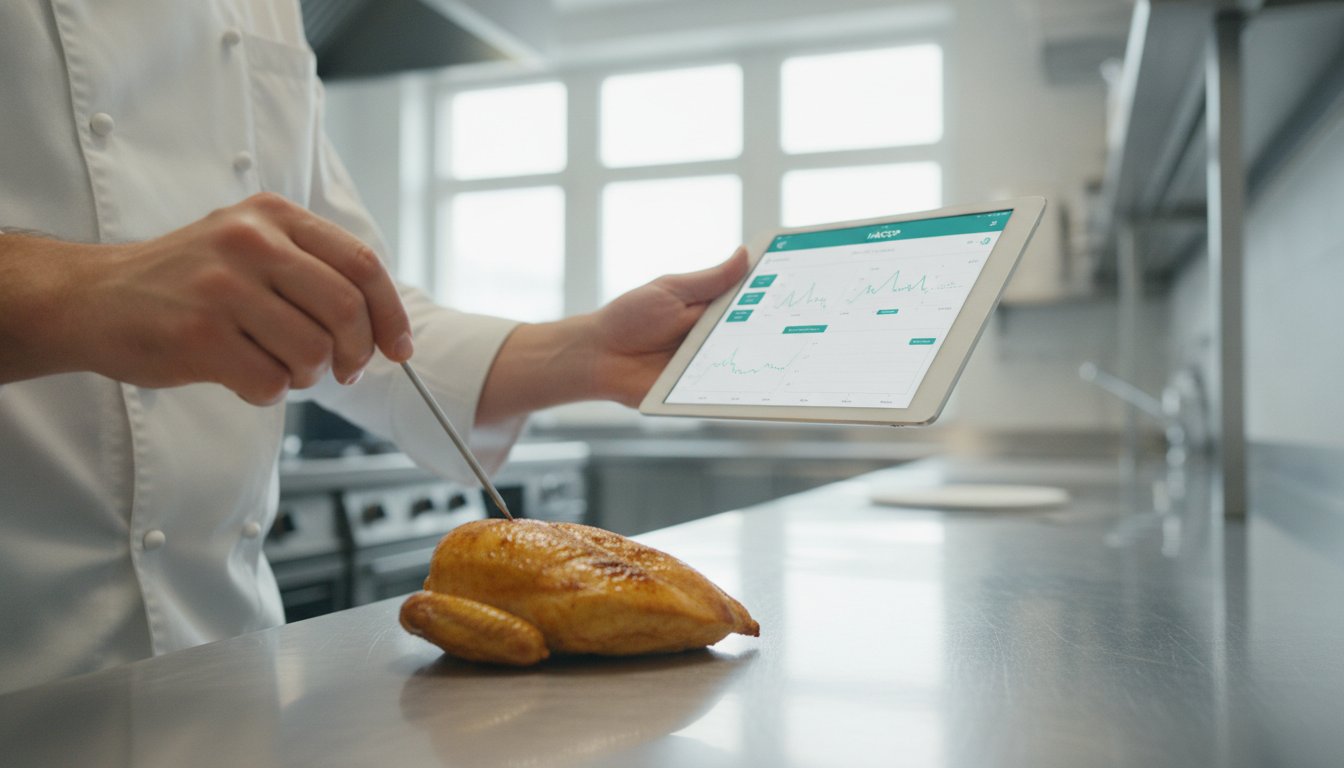
Paper-based safety logs are a persistent liability in the high-pressure environment of a commercial kitchen. They are easily damaged, frequently misplaced, and often suffer from "pencil-whipping," where staff back-fill data after a shift has ended. Transitioning to digital food safety checklists eliminates these vulnerabilities by introducing accountability and real-time oversight. When your goal is reducing risk of allergen cross-contact, you need a system that doesn't just record actions but actively guides them. Digital platforms ensure that every cleaning cycle and equipment check happens exactly when it should, providing a level of precision that manual systems simply cannot match.
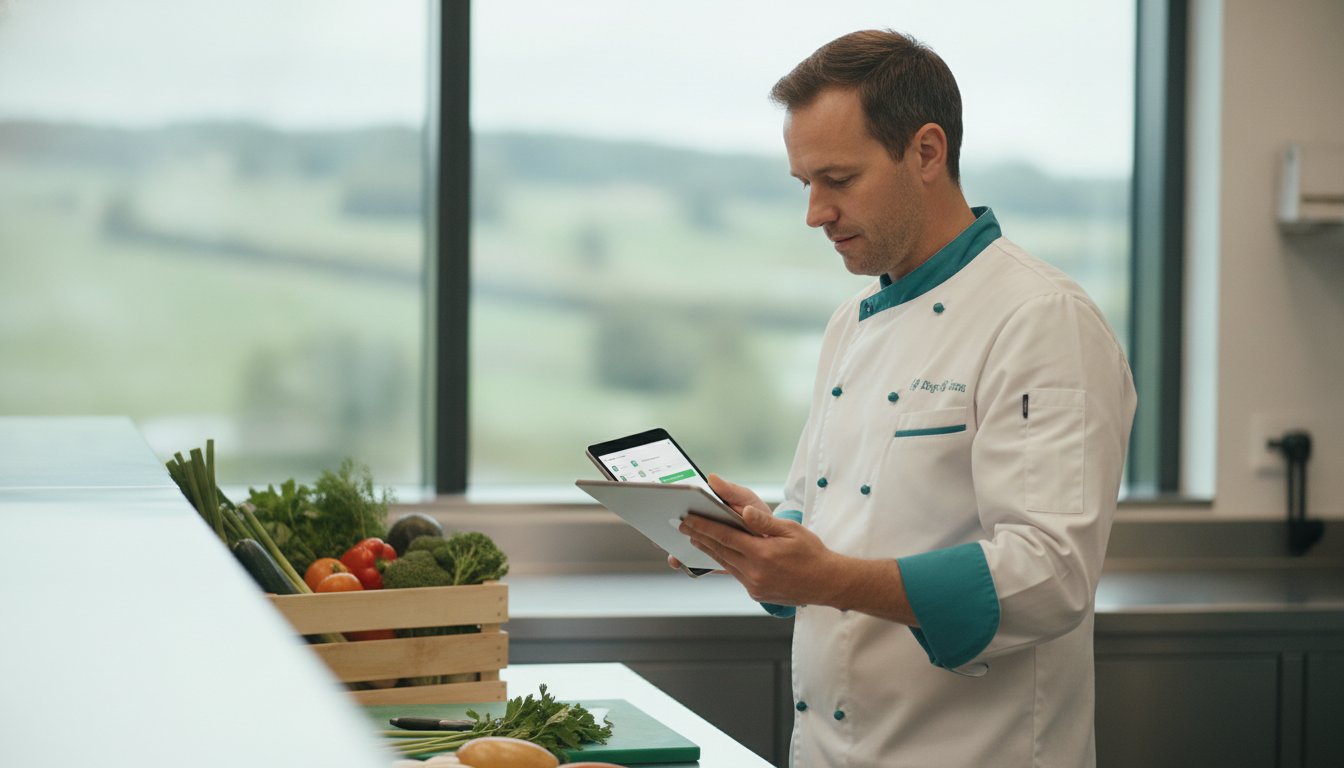
Centralizing your ingredient data is another critical advantage of a digital approach. Instead of relying on printed charts that quickly become outdated, your team can access a live, centralized allergen matrix on any tablet or handheld device. This ensures that even the newest staff members have the most current information at their fingertips, preventing errors caused by recent recipe changes or supplier substitutions. By integrating automated reminders for cleaning schedules, you create a fail-safe environment where allergen zone maintenance is never overlooked during peak service hours.
Real-Time Monitoring and Verification
Digital timestamps are the foundation of a modern safety culture. They prevent the temptation to falsify logs by requiring entries to be made at the moment the task is completed. To further strengthen your protocols, you can utilize photo-capture features to verify the clean-down of dedicated allergen stations. Seeing a time-stamped image of a sanitized purple prep zone provides a level of reassurance that a simple checkmark on a piece of paper never could. This transparent oversight naturally builds a safety-first mindset among the team, as every member knows their commitment to reducing risk of allergen cross-contact is being logged and valued.
Inspection Readiness and National Compliance
Preparing for a visit from Luxembourgish food safety inspectors becomes a friction-free process with a digital audit trail. Instead of scrambling through binders to find specific dates or signatures, you can generate comprehensive, professional reports in seconds. This readiness demonstrates a proactive approach to due diligence that auditors respect. Mandatory digital "sign-offs" for every allergen-sensitive order ensure that no dish leaves the kitchen without a verified safety check. To secure your kitchen's reputation and streamline your compliance workflow, Schedule a SafeBite demo to digitize your allergen management today.
Elevating Your Standards for a Safer Kitchen
Establishing a zero-incident environment requires a shift from reactive habits to proactive, system-driven management. Success lies in the combination of rigorous physical zoning and disciplined mechanical cleaning protocols. These efforts ensure that allergenic proteins are physically removed rather than just sanitized. By prioritizing these technical strategies, you aren't just following rules; you're protecting your guests and your business reputation. Precision in the kitchen is the only way to transform safety from a daily worry into a streamlined operational advantage.
The final step in reducing risk of allergen cross-contact is the transition to a verifiable digital framework. Trusted by Luxembourg hospitality leaders, our system replaces the uncertainty of paper logs with automated allergen alerts and inspection-ready digital logs. This technological oversight provides the calm authority needed to manage high-turnover teams with total confidence. Digitize your kitchen safety with SafeBite’s HACCP platform and ensure your operations remain one step ahead of regulatory demands. Build a culture of precision that empowers your team and reassures every guest who walks through your doors.
Frequently Asked Questions
Is allergen cross-contact the same as cross-contamination?
No, cross-contact and cross-contamination are distinct concepts in food safety. Cross-contamination involves the transfer of biological pathogens like salmonella, while cross-contact refers to the unintentional transfer of allergenic proteins. While cooking often eliminates pathogens, it does not remove these proteins. This is why reducing risk of allergen cross-contact requires a separate set of physical protocols designed specifically to prevent protein transfer between ingredients and surfaces.
Can I use the same fryer for gluten-free items if I filter the oil?
No, filtering oil does not remove allergenic proteins from the medium. Filters are designed to catch carbonized food debris, but microscopic proteins remain dissolved or suspended in the oil. Once oil is used to fry a dish containing wheat, milk, or shellfish, it is no longer safe for guests with those specific allergies. You must use dedicated fryers or portable induction units to maintain total oil isolation during service.
Does hand sanitizer remove food allergens from hands?
No, hand sanitizer is ineffective for removing food allergens from the skin. Alcohol-based gels are formulated to deactivate bacteria and viruses, but they don't rinse away the physical protein residues that trigger allergic reactions. Staff must use warm water and soap combined with vigorous mechanical friction to ensure their hands are physically clean before handling allergen-free orders. This mechanical action is the only way to rinse proteins away.
How often should I update my restaurant allergen matrix?
You should update your allergen matrix immediately whenever a recipe is modified or a supplier substitutes an ingredient. Even a minor change in a pre-made sauce or spice blend can introduce undeclared risks to your menu. Digital systems are the most efficient way to keep this data current across the entire team. They allow for instant, site-wide updates that replace outdated paper charts and ensure everyone has the same information.
What are the most common sources of allergen cross-contact in restaurants?
The most frequent sources of cross-contact include shared frying oil, shared utensils, and the plating area known as the pass. Airborne risks like flour dust and liquid transfer through steam or splashing also contribute significantly to the problem. Identifying these "invisible" points is a critical step in reducing risk of allergen cross-contact. It allows you to implement specific physical barriers where they are most needed in a busy kitchen.
Does heat or cooking kill allergens in food?
No, heat and standard cooking temperatures do not destroy or "kill" food allergens. Unlike bacteria, allergenic proteins are heat-stable and maintain their structural integrity even in high-heat environments like deep fryers or commercial ovens. This is why you cannot simply "cook out" an allergen once it has made contact with a dish. The only safe response is to discard the contaminated food and begin the preparation again.
What should I do if I suspect cross-contact has occurred?
If you suspect cross-contact has occurred, you must immediately discard the dish and restart the preparation process from scratch using clean equipment. Never attempt to remove the offending ingredient or "pick it off," as microscopic proteins will have already transferred to the rest of the food. Inform the guest of the delay honestly. It's always better to serve a late meal than one that could cause a medical emergency.
How can digital software help reduce allergen risks?
Digital software reduces risks by replacing unreliable manual logs with automated checklists and real-time verification. It centralizes your allergen matrix so that every team member has access to the most recent ingredient data at all times. These tools also create a verifiable audit trail. This ensures that cleaning schedules for dedicated zones are strictly followed and documented, making you ready for any national food safety inspection.