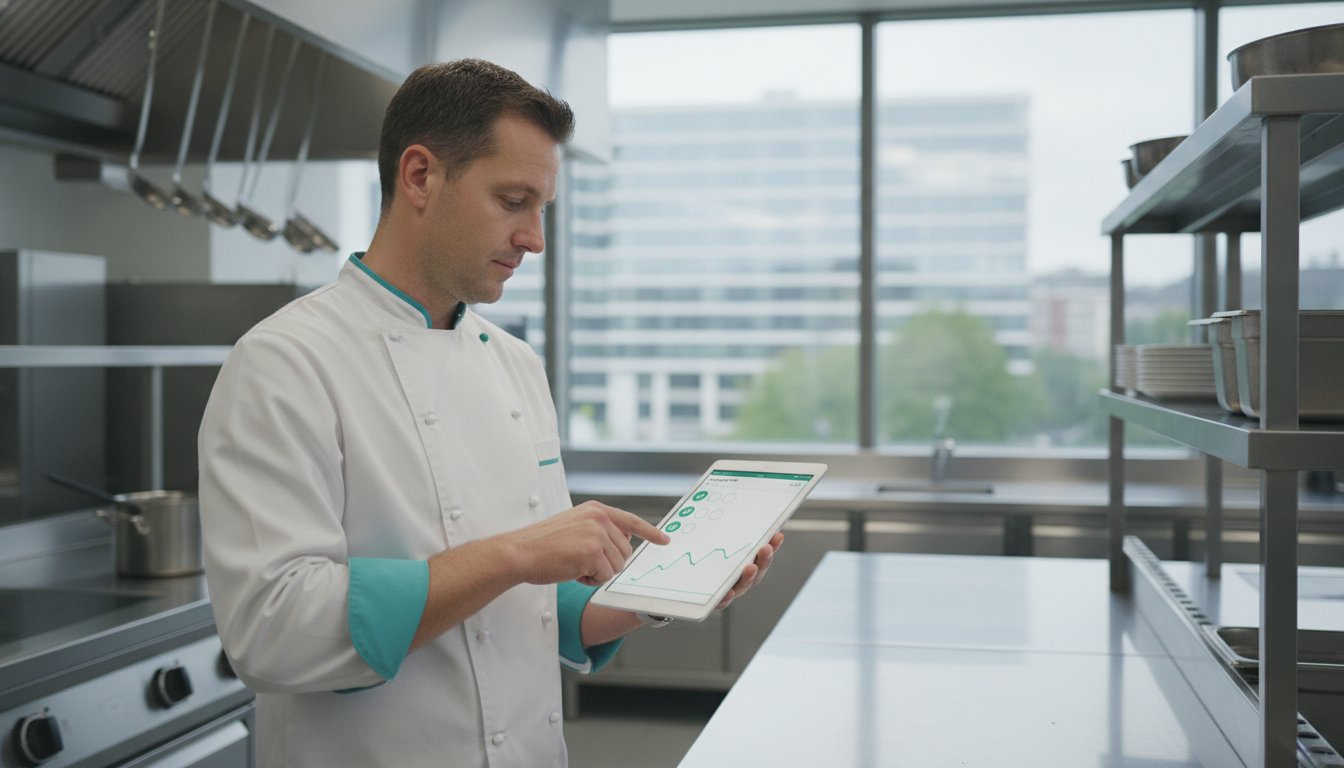

Nearly half of all allergen-related recalls are caused by undeclared ingredients, a statistic that highlights the inherent risks of manual data entry in a professional kitchen. You likely feel the daily pressure of ensuring every dish is safe while staying ahead of the rigorous standards set by the Luxembourg Food Safety Authority. It's a significant burden when a single communication breakdown between the kitchen and the serving staff can lead to severe penalties or a compromised guest experience.
Finding the most reliable software to track ingredients and allergens is no longer a luxury; it's a fundamental requirement for maintaining a modern, compliant food business. By transitioning to a digital tracking solution, you can eliminate manual errors and ensure 100% allergen compliance across your entire menu. This guide provides a clear roadmap for selecting a system that integrates seamlessly into your workflow. We'll explore how to implement real-time, automated allergen matrices and maintain inspection-ready documentation accessible from any device, ultimately reducing food waste through superior ingredient oversight.
Key Takeaways
- Eliminate the risk of human error by transitioning from fragile paper logs to a precise digital ecosystem for allergen management.
- Evaluate the core functionality of software to track ingredients and allergens, specifically focusing on automated recipe integration and cloud-based updates.
- Compare integrated HACCP platforms against standalone apps to maintain a single source of truth for your food safety documentation.
- Simplify the transition for your team by utilizing multilingual interfaces that bridge communication gaps between the kitchen and front-of-house staff.
- Leverage multi-site management tools to maintain total oversight with real-time monitoring and automated compliance alerts across all locations.
The High Cost of Manual Ingredient and Allergen Tracking
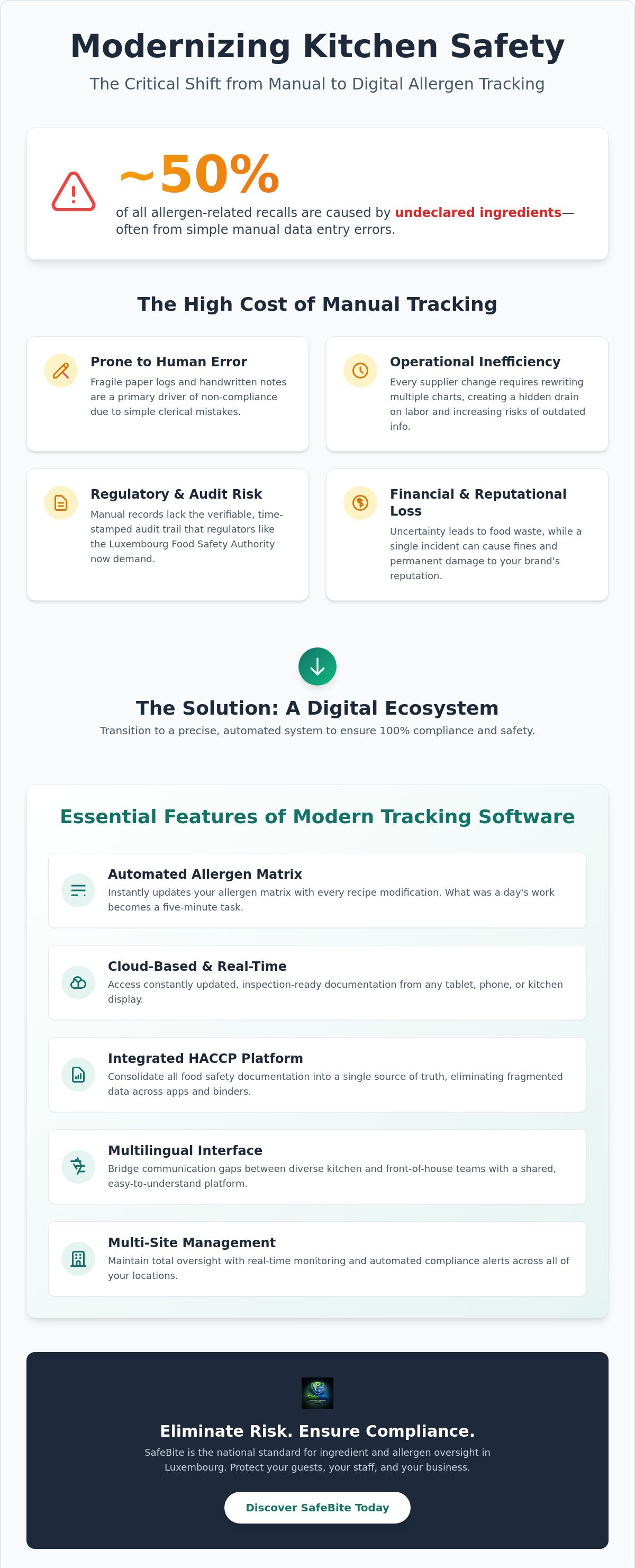
The transition from traditional paper binders to digital precision represents a fundamental change in how professional kitchens operate. In 2026, the complexity of supply chains makes manual tracking nearly impossible to maintain without error. When a kitchen relies on handwritten logs, they're essentially betting their reputation on the hope that every staff member perfectly records every sub-ingredient. Research indicates that nearly half of all allergen-related recalls are due to undeclared ingredients, often stemming from simple clerical mistakes. Human error within allergen matrices remains the primary driver of non-compliance. It's a systemic weakness that modern kitchens can't afford to ignore.
Operational efficiency suffers when ingredient lists are updated manually. Every time a supplier substitutes a product or changes a brand, your team must cross-reference and rewrite multiple charts. This creates a hidden drain on labor and increases the risk of outdated information reaching the serving staff. Implementing software to track ingredients and allergens resolves this by automating the update process, ensuring that a single change in the database reflects everywhere instantly. Without this automation, a kitchen is constantly one supplier swap away from an accidental safety breach.
The Regulatory Landscape: Beyond Just a Checklist
Inspectors from the Luxembourg Food Safety Authority have moved beyond simple tick-box exercises. They now look for evidence of proactive vigilance. Manual records are increasingly viewed as insufficient because they lack a verifiable, time-stamped audit trail. Digital systems provide the transparency regulators demand, showing exactly when and how data was updated. This shift means that being inspection-ready is no longer about a frantic scramble before an audit; it's a continuous state of readiness achieved through digital oversight.
Financial and Reputational Risks of Allergen Errors
The financial impact of a mistake extends far beyond potential fines. Uncertainty leads to significant food waste. If a chef can't verify an ingredient's origin with 100% certainty, the safe choice is often to discard the product. Beyond the bin, the reputational damage of a single incident is often permanent. A foundational step in preventing these outcomes is understanding food allergies and how cross-contamination occurs at a molecular level.
Global standards, influenced by transparency initiatives like Natasha's Law, now demand total clarity for both pre-packaged and made-to-order items. Customers expect to know exactly what's in their food. When your business uses professional software to track ingredients and allergens, you provide that certainty. You protect your guests, your staff, and your bottom line from the high cost of manual oversight.
Essential Features of Modern Ingredient Tracking Software
Identifying the right software to track ingredients and allergens requires looking beyond basic digital lists. You need a system that acts as a central nervous system for your kitchen operations, bridging the gap between procurement and the plate. Modern solutions integrate directly with your recipe databases to provide instant visibility into every component of a dish. This level of integration is essential because it aligns your internal processes with international standards, such as FDA allergen labeling requirements, which demand precise disclosure of major food allergens. Without this connectivity, your team is forced to rely on memory and fragmented notes, a strategy that inevitably leads to compliance gaps.
Modern systems typically include several critical capabilities:
- Automated syncing between ingredient databases and menu displays
- Cloud-based storage for access on tablets, phones, and kitchen displays
- Instant notification systems for recipe changes
- Customisable reporting for internal and external audits
Real-Time Allergen Matrix Automation
Manual spreadsheets are static and prone to decay. Digital automation ensures that every time a recipe is tweaked, the matrix updates itself. This makes creating an accurate allergen matrix a five-minute task rather than a day-long administrative burden. Front-of-house staff access these updates on tablets instantly, eliminating the risk of relying on outdated information during a busy service.
Supplier and Ingredient Oversight
Supply chain volatility is a constant challenge for modern chefs. Effective software tracks changes in raw ingredient composition by managing supplier allergen information digitally. When a supplier updates a "may contain" statement, the system flags every affected sub-recipe. This proactive vigilance prevents hidden allergens from creeping into your menu undetected while maintaining a clear audit trail for inspectors.
Real-time alerts provide the final layer of protection for a high-pressure kitchen. When a chef modifies a sauce or adds a garnish, the software triggers a smart notification to the relevant team members across all connected devices. This ensures communication never breaks down, even when staff are focused on speed. These systems also generate reports that transform internal audits into streamlined, stress-free processes. Selecting the right software to track ingredients and allergens is an investment in both guest safety and your team's operational efficiency. Utilizing a professional Allergen Management Tool ensures that your documentation is always accurate, synchronized, and ready for a surprise inspection from any regulatory body.
Standalone Apps vs. Integrated HACCP Platforms: A Comparison
Modern kitchens often face a choice between specialized standalone tools and comprehensive safety ecosystems. While a dedicated mobile app might seem like a quick fix for ingredient logging, it often creates a fragmented workflow. Managing separate logins for temperature monitoring, cleaning schedules, and allergen matrices leads to "subscription fatigue" and, more importantly, data silos. When your software to track ingredients and allergens exists in a vacuum, it fails to provide the holistic view necessary for total compliance. A single source of truth is vital for maintaining the integrity of your food safety data.
The "Compliance Gap" is a real risk when using disconnected systems. If an allergen update isn't automatically linked to your daily kitchen checklists, a critical piece of information might be missed during a high-pressure shift. Integrated platforms eliminate this risk by ensuring that every data point speaks to the others. This unified approach doesn't just save time; it creates a safety net that standalone apps simply can't provide. It turns a collection of digital tools into a disciplined, organized system that stays one step ahead of potential hazards.
The Efficiency Gap: Why Integration Matters
Staff training becomes significantly easier when your team only needs to master one interface. Instead of toggling between multiple applications, chefs can update a recipe and immediately see how it affects their digital HACCP checklists. This seamless flow reduces the administrative burden on your kitchen leadership. By removing the friction of multiple platforms, you ensure higher adoption rates and more accurate logging. Integrated systems prevent "compliance silos" where information is technically recorded but practically inaccessible when it's needed most.
Data Integrity and Audit Readiness
Centralized dashboards offer a strategic advantage for multi-site managers who need to oversee safety protocols across several locations. You can monitor compliance in real-time without leaving your office. When an inspector arrives, providing "one-click" proof of compliance is far more professional than searching through various apps for the right screen. This level of readiness is the backbone of a strong food safety culture because it demonstrates a commitment to transparency and precision.
Choosing the right software to track ingredients and allergens means looking for a partner that understands the practical realities of the industry. An integrated platform doesn't just store data; it actively manages risk by connecting every aspect of your food safety plan. This cohesion ensures that your documentation is always inspection-ready, your staff is always informed, and your guests are always protected.
Implementing Digital Tracking in a Multilingual Kitchen
Professional kitchens in Luxembourg operate as multilingual hubs where French, German, and English often intersect during a single service. This diversity is a cultural asset, but it creates operational challenges when communicating complex allergen data. Relying on verbal translations during a peak rush is a liability that often leads to misunderstandings. Utilizing software to track ingredients and allergens solves this by providing a standardized, visual reference that every staff member can understand. By centralizing data in a digital format, you remove the ambiguity of spoken language and replace it with verified accuracy.
High staff adoption rates are achieved when technology simplifies, rather than complicates, the workflow. Digital tools act as a bridge between the back-of-house and front-of-house teams, ensuring that servers aren't guessing when a guest asks a detailed question. This connectivity is a primary defense in reducing the risk of allergen cross-contact. When the entire team works from the same live data, the margin for error shrinks significantly. It's about moving from a reactive "shouting" culture to a proactive, visual safety system.
Streamlining Communication Between Teams
Digital filters allow servers to answer customer inquiries instantly without leaving the floor to find a chef. Instead of shouting questions across a busy pass, front-of-house staff use tablets to filter menus by specific allergens. This visual confirmation provides a layer of certainty that verbal communication cannot match. It transforms the interaction with the guest into a professional, safety-first experience. By using tablet-based systems to verify ingredients at the point of service, you ensure that the information given to the diner is identical to the recipe currently being prepared in the kitchen.
Training Staff for Digital Compliance
Effective implementation depends on how well your team uses the system. Focusing on training staff on food allergen awareness through the lens of digital tools makes the process more engaging. Many modern kitchens find success by gamifying compliance, encouraging consistent data entry through performance tracking and rewards. Smart reminders also play a vital role, ensuring that logs are never missed during high-pressure shifts. These automated nudges maintain the rhythm of safety without requiring constant managerial intervention.
Success in a modern kitchen requires tools that adapt to your team's needs rather than the other way around. If you're ready to upgrade your communication and compliance, explore how our Allergen Management Tool can transform your multilingual operations into a model of precision and safety.
SafeBite: The National Standard for Ingredient and Allergen Oversight
SafeBite provides a comprehensive ecosystem for kitchens that require absolute precision in their safety protocols. By choosing our software to track ingredients and allergens, you aren't just buying a digital list; you're implementing a disciplined framework that aligns perfectly with Luxembourgish national food safety standards. This system integrates seamlessly with our Digital HACCP Checklists to ensure every safety protocol is recorded with time-stamped accuracy. It's a professional solution designed to instill a sense of control and confidence in your management team, even during the most demanding shifts.
Our platform is built on the practical realities of the hospitality industry. We provide proactive support and localized expertise to help you transition from fragmented paper logs to a streamlined digital environment. This isn't a distant third-party service; it's a helpful extension of your internal team. By centralizing your data, you create a safety net that protects your business from the severe penalties associated with non-compliance. Our software to track ingredients and allergens ensures that your documentation is always inspection-ready and accessible from any device.
Centralised Dashboard for Multi-Site Management
Managing multiple restaurant locations presents unique risks to data integrity. The Multi-site Management Dashboard allows you to monitor ingredient consistency across your entire brand from a single screen. You can identify high-risk areas or compliance gaps before they lead to an inspection failure. Standardizing recipes and allergen data across a growing brand ensures that a guest receives the same safety-first experience at every site. This high-level oversight is essential for maintaining a unified food safety culture as your business scales.
Automated Alerts and Inspection Readiness
Proactive vigilance is the core of our philosophy. Our Allergen Management Tool sends real-time notifications when critical safety thresholds are missed or when a modification to a recipe occurs. These automated alerts ensure your team is always one step ahead, preventing communication breakdowns between the kitchen and the front-of-house. When an official inspector arrives, you can generate professional compliance reports in seconds. This level of readiness demonstrates a total commitment to transparency and precision. Book a demo to see SafeBite’s allergen management tool in action and discover how a unified digital safety ecosystem can transform your operations.
Future-Proofing Your Kitchen with Digital Precision
Modern food safety requires more than just a list of ingredients; it demands a proactive system that evolves with your menu and supply chain. By implementing professional software to track ingredients and allergens, you replace operational uncertainty with digital certainty. This transition ensures that your kitchen remains inspection-ready while protecting your guests from the risks of hidden allergens. You've seen how integrated platforms provide the oversight necessary to manage multiple sites and multilingual teams with ease. It's about moving from a reactive mindset to a state of constant readiness.
SafeBite is trusted by leading Luxembourgish hospitality brands to maintain full compliance with national HACCP standards. Our system provides automated real-time allergen matrix generation, giving you total control over your data. It's time to move beyond the limitations of paper and fragmented apps. Digitise your allergen management with SafeBite today to ensure your business is prepared for the regulatory landscape of 2026 and beyond. We're here to help you build a safer, more efficient kitchen that values precision above all else.
Frequently Asked Questions
Is digital allergen tracking legally required in Luxembourg?
While paper records are technically permitted, the Luxembourg Food Safety Authority requires businesses to provide accurate, up-to-date allergen information for all dishes. Manual logs are increasingly scrutinized for their potential for error during inspections. Professional software to track ingredients and allergens is the most reliable method to demonstrate proactive compliance and ensure your data meets the required safety standards without the risk of clerical mistakes.
How does software help prevent cross-contamination in the kitchen?
Digital systems prevent cross-contamination by providing specific, visual preparation protocols for dishes containing allergens. When a high-risk ingredient is flagged, the software triggers mandatory cleaning checklists or alerts staff to use dedicated equipment for that specific order. This structured approach ensures that safety steps aren't skipped during busy service periods, maintaining a disciplined and organized environment for your team.
Can ingredient tracking software integrate with my existing POS system?
Most modern platforms are designed to integrate with Point of Sale (POS) systems to ensure data consistency across your entire business. This connectivity allows allergen updates made in your recipe database to flow directly to your digital menus or server tablets. It eliminates the need for manual double entry and ensures that the information provided to the customer is always synchronized with what's being prepared in the kitchen.
What happens if my internet goes down? Will I lose my allergen data?
You won't lose your data if your connection is interrupted. Professional systems utilize local caching or offline modes that allow you to access critical allergen information on tablets and devices even without a live signal. Once your internet is restored, the system automatically synchronizes any updates made during the downtime to ensure your records remain complete, time-stamped, and ready for an audit.
How long does it take to set up an allergen matrix in SafeBite?
Initial setup time depends on the complexity of your menu, but automated import tools can generate a functional matrix in just a few minutes. By uploading your existing recipe data, the system identifies major allergens and populates the matrix for your final review. This streamlined process replaces the days of administrative work typically associated with manual spreadsheet creation and traditional paper filing.
Is the software available in multiple languages for my kitchen staff?
The interface is fully accessible in French, German, and English to accommodate the multilingual nature of Luxembourgish kitchens. Staff can select their preferred language, ensuring that safety instructions and allergen alerts are understood by every member of the team. This feature is vital for reducing communication errors and ensuring high adoption rates in high-pressure, diverse kitchen environments.
Does SafeBite help with temperature monitoring as well as allergens?
Yes, our platform is a comprehensive safety ecosystem that includes a Temperature Monitoring System alongside the Allergen Management Tool. This integration allows you to oversee all critical control points from a single, centralized dashboard. Managing your temperature logs and allergen data in one place ensures a higher level of data integrity and simplifies your overall compliance strategy for local health inspections.
How much does allergen management software typically cost for a single site?
Pricing for professional software to track ingredients and allergens is generally based on the scale and specific needs of your operation. Most providers offer tiered subscription models that can be tailored to individual restaurant sites or larger multi-site hospitality groups. We recommend requesting a custom consultation to ensure you receive a solution that fits your specific volume and regulatory requirements while delivering maximum operational value.